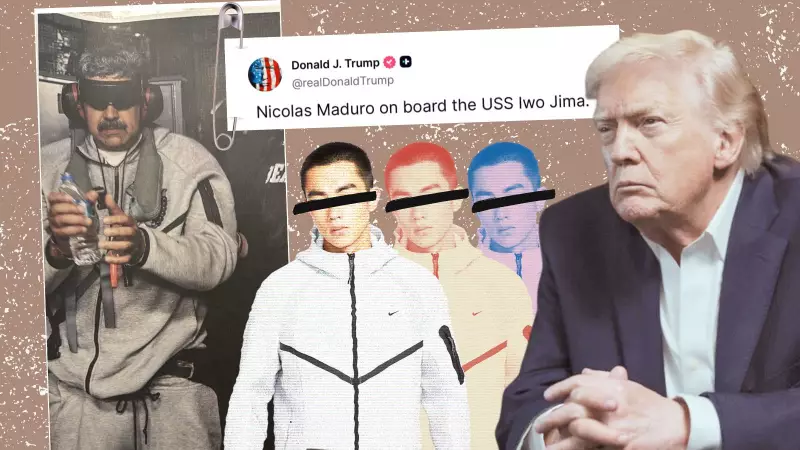
The start of 2026 delivered a geopolitical shockwave that was instantly overshadowed by an unlikely sartorial detail. The capture of Venezuelan President Nicolas Maduro by the United States, a moment with profound implications for international law and global order, was hijacked online by a single element: the grey Nike Tech Fleece sweatsuit he was reportedly wearing when US President Donald Trump announced the arrest.
From Geopolitical Theatre to Gym Bro Meme
The image shared by President Trump on January 3, 2026, was intended to signal a dramatic enforcement of narco-terrorism charges. Instead, the internet zeroed in on Maduro's attire, the ubiquitous uniform of fitness enthusiasts. The dissonance was stark. While experts debated the erosion of territorial integrity and the future of a rules-based world, a parallel digital universe dissected the quarter-zip jacket and joggers.
Memes, the currency of online reaction, spread with viral ferocity. AI-generated images depicted Maduro in his Nike fit smoking on a sidewalk. Others played on Nike's "Just Do It" slogan with captions like "just coup it." A video, entirely fabricated, showed him dancing in a cell. The sweatsuit, already a meme subject in the US and UK for its cultural connotations, became the perfect prop. Analysts had previously linked such attire to portrayals of criminality in pop culture, from The Sopranos to Goodfellas, making Maduro's choice ripe for ironic commentary.

The Coping Mechanism and Its Cost
This phenomenon is not isolated. The internet has repeatedly met serious news with trivialising humour. From the Louvre burglary to the arrest of alleged assassin Luigi Mangione, where discussions fixated on his jawline, the pattern is clear. Experts suggest memes act as a coping mechanism, helping people process stressful geopolitical crises, wars, and inflation through shared laughter and community building. Humour makes overwhelming news palatable.
However, this memeification points to a troubling trend. When empathy is replaced by ridicule and complex events are reduced to throwaway jokes, we risk breaking down social understanding. The common retort—"it's not that deep"—may be the very problem, discouraging necessary introspection about which moments truly demand our full, unironic attention.
When Governance Becomes Content Creation
The issue is compounded when official channels themselves engage in meme culture. The Trump administration has repeatedly used AI-generated imagery and provocative language online. Following Maduro's capture, the official White House account posted an image with the acronym "FAFO" (F*** Around and Find Out), while the State Department warned other nations not to "play games with President Trump."
This blurring of lines is dangerous. When leaders govern through memes and the public consumes crises as entertainment, we lose the ability to distinguish spectacle from substance and performance from policy. The confusion is exemplified by the recent speculation about the US acquiring Greenland, hinted at through an ambiguous social media post by a Trump aide's wife. In this landscape, the line between joke and geopolitical threat vanishes, and the resulting confusion becomes the point.
The viral journey of Maduro's Nike sweatsuit is more than a funny internet moment. It is a stark reflection of our digital age, where the noise of humour and performance can drown out the signal of significant, sobering reality. The challenge now is to navigate this fugue state of doomscrolling and reclaim the capacity for nuanced, compassionate engagement with the world.