Brazil's Lula Condemns Trump's Board of Peace as Attempt to Forge 'New UN'
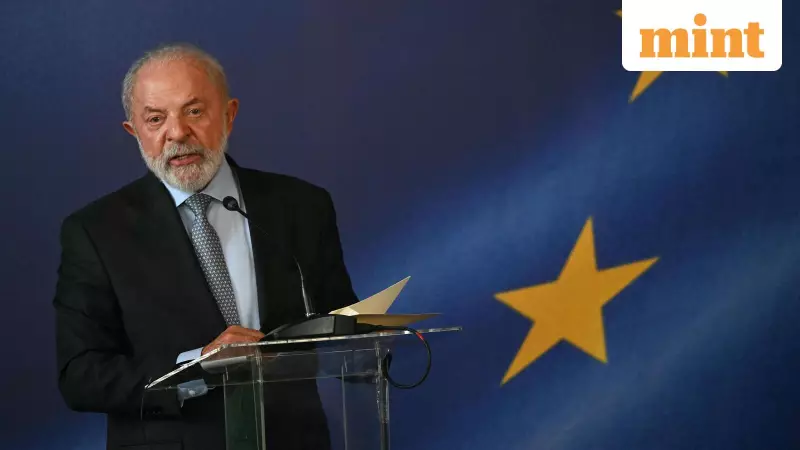
Brazilian President Luiz Inacio Lula da Silva has reportedly accused former US President Donald Trump of attempting to establish "a new United Nations" through his proposed "Board of Peace" initiative. The veteran leftist leader made these remarks on Friday, expressing deep concerns about the potential implications for global multilateralism.
Trump's Controversial Global Initiative
On Thursday, Donald Trump unveiled his Board of Peace at the World Economic Forum in Davos, Switzerland, with the stated purpose of leading ceasefire efforts in Israel's conflict with Hamas. The former president insisted that "everyone wants to be a part" of this new body, despite significant skepticism from numerous world powers.
Trump's vision extends beyond the immediate Gaza situation, as he suggested the board could "spread it out to other things as we succeed in Gaza." This broader ambition has raised alarms among traditional allies and international organizations about potential competition with existing global governance structures.

Lula's Strong Criticism of the Initiative
President Lula delivered a particularly sharp critique of Trump's proposal, stating: "Instead of fixing the United Nations, what's happening? President Trump is proposing to create a new UN where only he is the owner." The Brazilian leader framed this as a defense of multilateralism against what he termed "the law of the jungle" in international affairs.
Lula's comments came shortly after a telephone conversation with Chinese leader Xi Jinping, who had urged his counterpart to safeguard the "central role" of the United Nations in global governance. The Brazilian president echoed these sentiments, warning that "the UN charter is being torn" by such alternative initiatives.
International Resistance and Concerns
The Board of Peace has faced significant resistance from several key nations:
- France declared the board's charter "incompatible" with its international commitments, particularly its UN membership obligations
- Britain expressed reservations about the inclusion of Russian President Vladimir Putin, whose forces remain engaged in Ukraine
- No other permanent member of the UN Security Council has committed to joining beyond the United States
- Many traditional US allies have opted not to participate despite Trump's claims of widespread support
Structural Details and Ambitions
The Board of Peace features several controversial structural elements:
- Trump himself will serve as chairman of the organization
- A permanent seat reportedly costs $1 billion, raising questions about accessibility and influence
- Although initially focused on Gaza reconstruction, the charter appears to allow broader global intervention
- Trump asserted that 59 countries had signed on, though only 19 were represented at the Davos launch
Potential Impact on Global Governance
International observers express concern that the Board of Peace could undermine the United Nations' role as the primary platform for global diplomacy and conflict resolution. Trump's statement that "once this board is completely formed, we can do pretty much whatever we want to do" has particularly alarmed proponents of established international institutions.
Despite these concerns, the board's creation received endorsement through a United Nations Security Council resolution as part of Trump's Gaza peace plan. A UN spokesperson clarified that engagement with the board would be limited to this specific context, suggesting cautious rather than wholesale acceptance of the new initiative.
The emergence of this parallel global governance structure represents a significant challenge to traditional multilateral frameworks, with implications for international law, diplomacy, and conflict resolution mechanisms established since World War II.