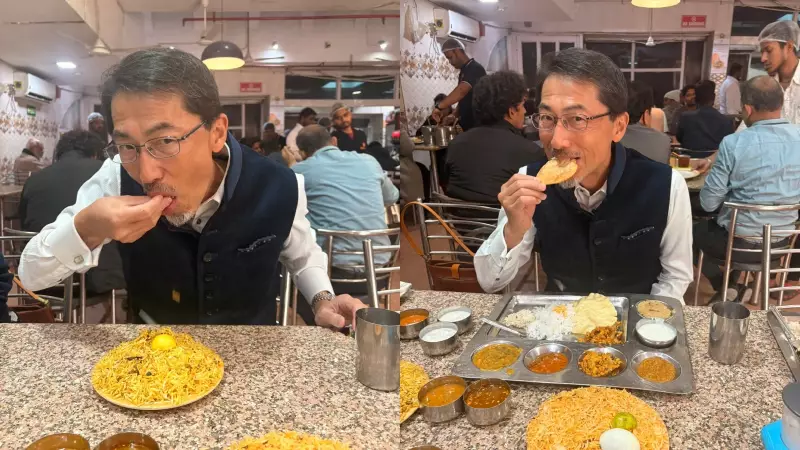
In a delightful display of cultural immersion, Japanese Ambassador to India Ono Keiichi recently tried eating biryani by hand at Andhra Bhavan in Delhi. This charming incident highlights the deepening ties between Japan and India, as diplomats engage in local traditions to foster mutual understanding and friendship.
A Diplomatic Gesture of Culinary Exploration
Ambassador Ono Keiichi, known for his active engagement in Indian society, visited Andhra Bhavan, a popular restaurant in Delhi renowned for its authentic South Indian cuisine. During his visit, he opted to experience the traditional Indian way of eating biryani—using his hands instead of cutlery. This act not only demonstrated his respect for Indian customs but also served as a symbolic gesture of Japan's commitment to building stronger bilateral relations with India.
Embracing Indian Traditions
The ambassador's decision to eat biryani by hand is significant in the context of cultural diplomacy. In many parts of India, eating with hands is considered a way to connect more intimately with food, enhancing the sensory experience. By participating in this practice, Ono Keiichi showed a willingness to step out of his comfort zone and embrace Indian heritage, which has been warmly received by locals and social media users alike.

Andhra Bhavan, located in the heart of Delhi, is a government-run canteen that offers affordable and delicious Andhra-style meals, including its famous biryani. It has long been a favorite spot for politicians, diplomats, and food enthusiasts, making it an ideal venue for such cultural exchanges. The ambassador's visit there underscores the role of food as a bridge between nations, transcending linguistic and political barriers.
Reactions and Implications
This event has sparked positive reactions online, with many Indians praising the ambassador for his humility and curiosity. It aligns with broader efforts to promote people-to-people connections between Japan and India, which have been growing through trade, technology collaborations, and cultural programs. Such interactions are crucial in an era where soft power plays a vital role in international relations, helping to build trust and cooperation beyond formal diplomatic channels.
Moreover, this incident reflects a trend of foreign diplomats in India engaging with local culture to strengthen ties. As India continues to rise as a global power, such gestures by international representatives can enhance mutual respect and pave the way for more collaborative initiatives in areas like economy, technology, and education.
Conclusion: A Symbol of Friendship
In summary, Japanese Ambassador Ono Keiichi's experience of eating biryani by hand at Andhra Bhavan in Delhi is more than just a culinary adventure—it is a testament to the growing camaraderie between Japan and India. By embracing Indian traditions, he has set an example for cultural exchange that resonates with citizens of both countries, fostering a spirit of unity and shared values in an increasingly interconnected world.