Jaishankar Outlines India's BRICS 2026 Vision Amid Global Tensions
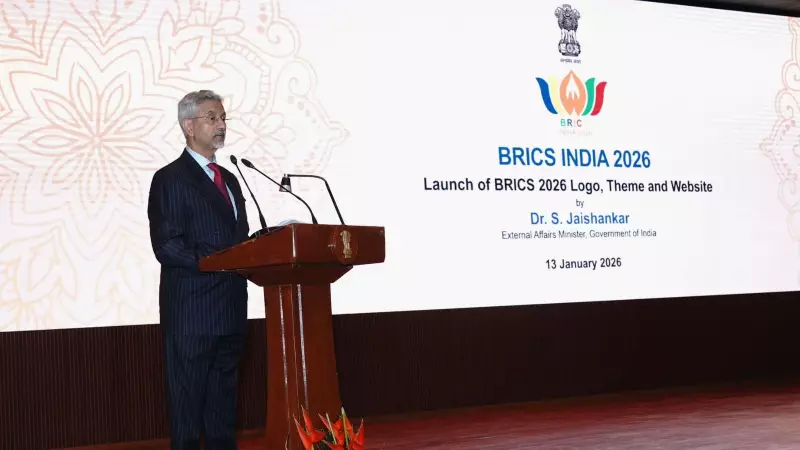
External Affairs Minister S Jaishankar presented India's strategic approach for the BRICS 2026 presidency on Tuesday. He launched the official logo and website for the upcoming summit in New Delhi. This announcement came on the same day the United States threatened additional tariffs on nations trading with Iran, including India.
Navigating a Complex Global Landscape
Jaishankar emphasized the current global environment is filled with uncertainties and complications. He stated the world faces complex, interlinked challenges. These include geopolitical tensions, difficult economic conditions, climate risks, rapid technological changes, and persistent development gaps affecting countries worldwide.
"The current global environment presents complex and interlinked challenges," Jaishankar said. "Geopolitical uncertainties, complicated economic landscapes, climate-related risks, technological changes, and persistent development gaps continue to affect countries across regions."

He affirmed BRICS remains a crucial forum for encouraging dialogue, cooperation, and practical responses. The forum respects national priorities at different development stages.
US Tariff Pressure and BRICS Solidarity
India currently faces a 25 percent penalty tariff from the US for importing oil from Russia, another key BRICS member. Brazil, also a BRICS nation, faces similar US tariff pressure. Jaishankar's remarks highlighted shared challenges among developing economies within the grouping.
He spoke of India's objective of promoting global welfare through collective action. The minister stressed the importance of building structural institutional strengths capable of weathering global shocks.
Four Pillars for BRICS 2026
Jaishankar detailed four broad priorities guiding India's BRICS 2026 chairship:
- Resilience
- Innovation
- Cooperation
- Sustainability
These priorities will provide a coherent framework across BRICS' three foundational pillars:
- Political and security cooperation
- Economic and financial collaboration
- Cultural and people-to-people exchanges
"We will endeavour to build structural institutional strengths capable of weathering global shocks," Jaishankar declared. "India intends to work with BRICS partners to build resilience in agriculture, health, disaster risk reduction, energy and supply chains, including through cooperative frameworks that enhance collective preparedness and response."
Extensive Meetings Across India
India will follow its successful G20 Presidency model for BRICS 2026. The country plans to hold meetings and host delegations in all 28 states and nine Union Territories. Officials confirmed around 100 meetings will occur across 60 Indian cities.
The schedule includes:
- Two foreign ministers' meetings
- One national security advisers' meeting
- Four to five sherpa or sous sherpa meetings
- Approximately 20 ministerial meetings
Key ministerial meetings will take place in Bangalore, Hyderabad, Chennai, Chandigarh, Ahmedabad, and Lucknow, beyond the national capital.
Technology and Sustainability Focus
Jaishankar highlighted leveraging new and emerging technologies as crucial for tackling socio-economic challenges, particularly for developing nations. He emphasized enhanced cooperation in start-ups, MSMEs, and emerging technologies can contribute meaningfully to building a more equitable world.
Sustainability remains a crucial pillar of cooperation within BRICS. The minister noted this focus aligns with global efforts to address climate change and promote sustainable development.
Symbolism of the BRICS 2026 Logo
The newly unveiled BRICS logo features a lotus incorporating colors from all member countries. Jaishankar explained this design reflects India's approach combining tradition and modernity.

"The petals incorporate the colours of all BRICS member countries, representing unity in diversity and a strong sense of shared purpose," he said. "The logo conveys that BRICS draws strength from the collective contributions of its members while respecting their distinct identities."
Expanded BRICS Membership
The BRICS forum now includes 11 nations: Russia, China, Brazil, South Africa, Egypt, the United Arab Emirates, Iran, Saudi Arabia, Ethiopia, and Indonesia. Senior leadership from these countries is expected to attend the leaders' summit in New Delhi.
Partner countries include Belarus, Bolivia, Kazakhstan, Cuba, Malaysia, Nigeria, Thailand, Uganda, and Uzbekistan. This expanded membership reflects the growing influence of the Global South in international affairs.
Jaishankar's comprehensive presentation positions India's BRICS presidency as a platform for addressing contemporary global challenges through cooperation among developing economies.