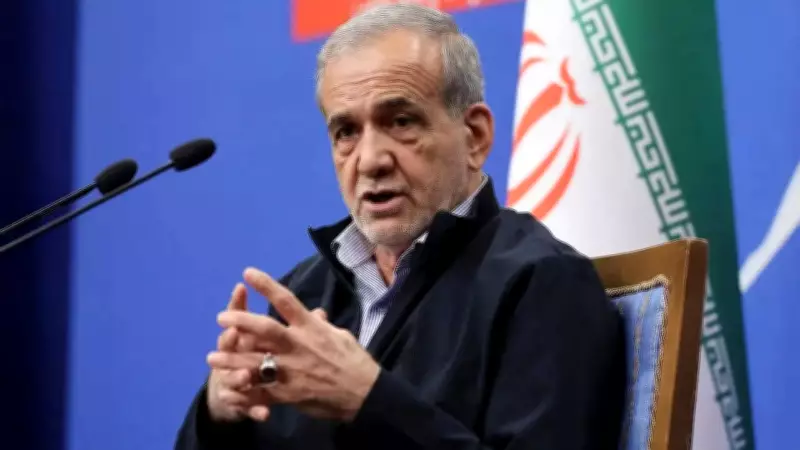
Iranian President Issues Stern Warning to Israel Over Lebanon Military Operations
Iranian President Masoud Pezeshkian delivered a forceful statement on Thursday, sharply criticizing Israel's military activities in Lebanon and emphasizing Tehran's preparedness to take action. He warned that ongoing strikes could severely disrupt current diplomatic initiatives aimed at de-escalating tensions.
Pezeshkian Condemns Israeli Actions as Ceasefire Violation
In a post on social media platform X, Pezeshkian explicitly denounced Israel's renewed incursion into Lebanon, labeling it a blatant breach of the initial ceasefire agreement. He described this move as a dangerous indicator of deceit and a lack of commitment to potential future accords. The Iranian leader cautioned that if these actions persist, they will render ongoing negotiations entirely meaningless, undermining efforts to achieve a peaceful resolution.
Pezehkian's remarks followed reports of Israeli strikes in Lebanon the previous day, which allegedly resulted in over 200 fatalities. He reaffirmed Iran's steadfast support for Lebanon, declaring, "Iran will never forsake its Lebanese brothers and sisters," and reiterated Tehran's solidarity amid the escalating conflict.

Netanyahu Signals Fragility of Ceasefire, Readiness to Resume Strikes
Earlier on Wednesday, Israeli Prime Minister Benjamin Netanyahu indicated that the current pause in hostilities remains precarious. In his first briefing since the ceasefire involving the United States and Iran, Netanyahu asserted that the truce does not signify an end to the conflict. He maintained a hardline stance, stating that Israel retains the option to resume military operations at any moment if its objectives are not met.
Netanyahu emphasized that while the ceasefire was established in full cooperation with Israel, it explicitly does not apply to Hezbollah. He declared that Israeli forces will continue to target the group despite the broader pause involving Iran, underscoring the ongoing volatility in the region.
Details of the US-Iran Ceasefire and Negotiation Framework
The United States and Iran have agreed to a two-week ceasefire, designed to create a window for negotiations rather than formally concluding the conflict. Talks are anticipated to commence in Islamabad under Pakistani mediation, aiming to address core issues and prevent further escalation.
A critical condition of this truce is the reopening of the Strait of Hormuz, with Washington linking the continuation of the ceasefire to ensuring safe maritime transit through this vital waterway. Iran has proposed additional terms, including sanctions relief and the release of frozen assets, highlighting the complex diplomatic landscape that negotiators must navigate to sustain peace efforts.