

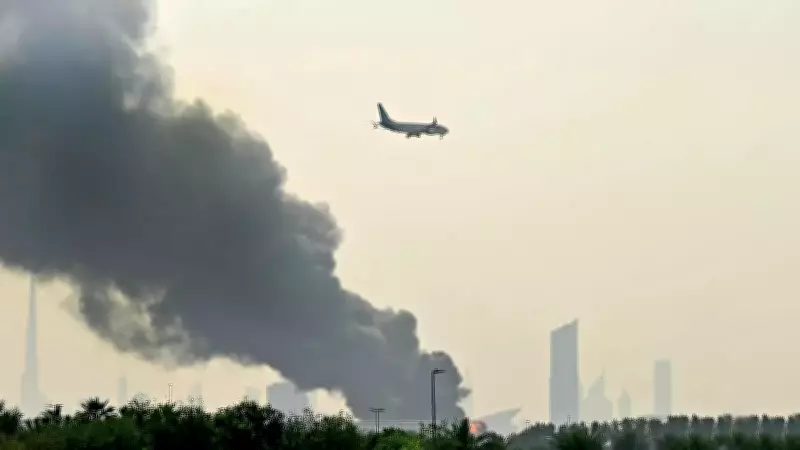
Iran War Triggers Major Flight Disruptions from India
The ongoing US-Israel military conflict against Iran has unleashed severe turbulence on air travel from India, forcing airlines to adopt lengthy detours that are stretching pilot shifts beyond 11 hours and pushing ticket prices above ₹1 lakh. This dramatic rerouting has transformed routine flights into grueling journeys, with Air India pilots now making unusual announcements to passengers about landmarks like the pyramids of Giza during overflights of Egypt.
Extended Routes and Pilot Fatigue
Since February 28, flights heading west from India—excluding those to the west coast of North America—must navigate a complex path to avoid conflict zones. Indian carriers are steering clear of Pakistani airspace, while all airlines are bypassing Iranian airspace due to the war. The new route involves flying over the Arabian Sea, then turning right from Oman towards Muscat, Saudi Arabia, or beyond, proceeding via Cairo to reach destinations in Europe, the UK, and North America. The return journey follows the same circuitous path.
This detour has significantly increased flight durations, leading to pilot shifts that often exceed 11 hours. Fatigued Air India pilots operating flights to and from the West now frequently inform passengers on clear days that those seated on the right or left can spot the pyramids of Giza while overflying Egypt, highlighting the extended nature of these journeys.

Deserted War-Zone Corridors and Economic Impact
The air traffic corridor covering the conflict-affected regions—including Afghanistan, Iran, Iraq, Lebanon, Jordan, and Israel—now appears largely deserted, with almost all aircraft flying below this passage to maintain safety. Even usable corridors in parts of Saudi Arabia are experiencing disruptions due to the war's ripple effects.
The economic consequences are stark, with ticket prices for affected routes soaring past ₹1 lakh as airlines grapple with increased fuel costs and operational challenges from the longer routes. This has placed a heavy burden on travelers and the aviation industry alike, compounding the logistical hurdles faced by carriers.
Broader Implications for Aviation
The rerouting not only impacts flight times and costs but also raises concerns about pilot well-being and operational efficiency. The extended shifts pose risks of fatigue, potentially affecting safety, while the deserted war-zone corridors underscore the broader geopolitical tensions reshaping global air travel. As the conflict persists, airlines from India and beyond must continue adapting to these challenging conditions, with passengers bearing the brunt through higher fares and longer travel times.






