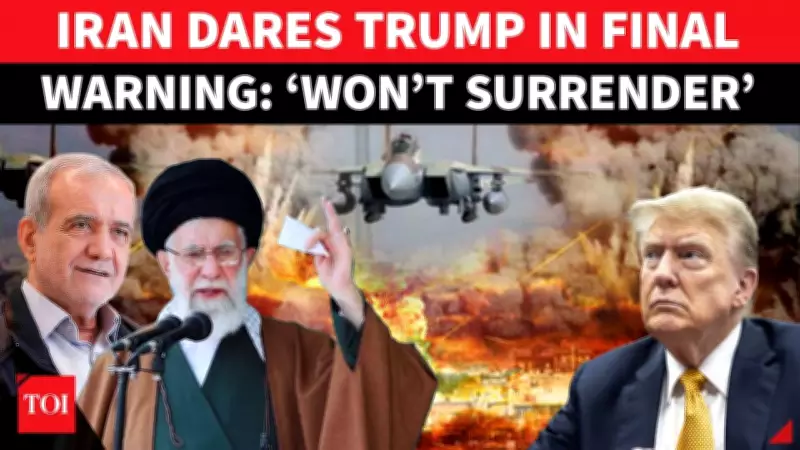
Iran's Defiant Stance In Escalating Nuclear Showdown With United States
In a dramatic escalation of geopolitical tensions, Iranian President Masoud Pezeshkian has delivered a defiant warning to the United States, declaring that Iran will "never bow" to international pressure regarding its nuclear program. This bold statement comes amid significant military buildup in the Middle East and renewed diplomatic negotiations that appear increasingly fragile.
Military Buildup And Diplomatic Tensions Reach Critical Phase
The nuclear standoff between Tehran and Washington has entered what analysts describe as a critical phase, with both sides demonstrating military readiness while maintaining diplomatic channels. President Donald Trump has reportedly signaled that limited military strikes remain a viable option, even as behind-the-scenes negotiations continue. This dual approach has created an atmosphere of heightened uncertainty throughout the region.
Iran's leadership has responded forcefully to what they perceive as American aggression. "We will never submit to external pressure or threats," President Pezeshkian emphasized during his address, directly challenging the Trump administration's strategy. The Iranian president specifically referenced the substantial US military presence in the Middle East, including warship deployments that have raised regional security concerns.

The Delicate Balance Between Confrontation And Negotiation
Observers note that the current situation presents a precarious balance between potential military confrontation and diplomatic resolution. The nuclear negotiations, which have been ongoing for years, now face their most serious test as both nations appear to be preparing for multiple possible outcomes. The deployment of additional military assets by the United States has been interpreted by Tehran as both a threat and a bargaining tool in these high-stakes discussions.
Regional stability hangs in the balance as this geopolitical drama unfolds. Several key questions dominate international discourse:
- Will diplomatic efforts yield a breakthrough agreement?
- Could military posturing escalate into actual conflict?
- How will regional allies respond to increasing tensions?
- What impact will this have on global energy markets and security?
Historical Context And Future Implications
This latest development represents another chapter in the long-standing tensions between Iran and the United States regarding nuclear capabilities. Previous agreements have collapsed, sanctions have been imposed and lifted, and military threats have been exchanged repeatedly over the past decade. The current administration's approach appears to combine maximum pressure tactics with selective engagement, creating what some analysts describe as a "volatile equilibrium."
The international community watches closely as events unfold, recognizing that the outcome could reshape Middle Eastern geopolitics for years to come. European powers, regional neighbors, and global institutions have all expressed concern about the potential for escalation, while simultaneously working to facilitate dialogue between the opposing parties.
As warships patrol strategic waterways and diplomats shuttle between capitals, the world awaits clarity on whether this nuclear showdown will culminate in confrontation or compromise. The coming weeks are expected to reveal whether President Pezeshkian's defiant stance will lead to renewed negotiations or increased hostilities in one of the world's most volatile regions.