Iran Lauds Russia's UN Security Council Veto on Hormuz Resolution
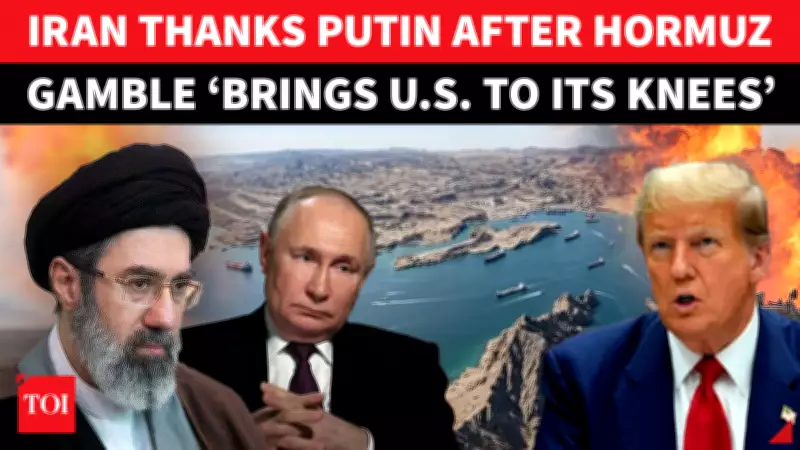
In a significant diplomatic development, Iran has expressed gratitude towards Russia following Moscow's decisive veto of a United Nations Security Council resolution concerning security enhancements in the strategically vital Strait of Hormuz. The resolution, which had garnered backing from the United States, was blocked by Russia in a move that Tehran has warmly welcomed as a demonstration of international solidarity and responsible statecraft.
Foreign Ministers Hail 'Responsible Decision'
Iranian Foreign Minister Seyed Abbas Araghchi engaged in detailed discussions with his Russian counterpart, Sergey Lavrov, in the aftermath of the Security Council vote. During their conversation, Araghchi characterized Russia's veto as a "responsible decision" that countered what Iranian officials labeled a one-sided proposal advanced by the United States. This diplomatic exchange underscores the deepening coordination between Tehran and Moscow on key geopolitical issues, particularly those affecting Middle Eastern security dynamics.
According to reports from Iranian state media, Minister Araghchi emphasized a critical point during the talks: the assurance of safe and unimpeded navigation through the Strait of Hormuz is intrinsically linked to direct coordination with Iran's armed forces. Furthermore, he reiterated that the United States must adhere to its international commitments and obligations to foster regional stability. The Strait of Hormuz serves as a crucial maritime chokepoint for global oil shipments, making its security a matter of international concern.

Broader Regional Context and Upcoming Talks
This diplomatic maneuver occurs against the backdrop of heightened tensions in the Middle East and precedes a pivotal series of ceasefire negotiations. These talks, which are being brokered by Pakistan, are scheduled to take place in Islamabad and aim to address ongoing conflicts and hostilities in the region. The timing of Russia's veto and Iran's subsequent appreciation highlights the intricate web of alliances and rivalries that define contemporary international relations.
The Iranian stance, as articulated by Araghchi, positions Tehran as a key stakeholder whose cooperation is essential for any meaningful security framework in the Persian Gulf. By framing the U.S.-backed resolution as unbalanced, Iran seeks to assert its sovereignty and strategic importance, while Russia's support bolsters its role as a counterweight to Western influence in the United Nations and beyond.
This episode not only reflects the ongoing diplomatic tussles within the UN Security Council but also signals the complex interplay of national interests that shape global governance. As the international community watches the unfolding developments, the outcomes of the forthcoming Islamabad talks and continued diplomatic engagements will be crucial in determining the trajectory of peace and security in the Middle East.