Iran's President Challenges US Authority Over Nuclear Program
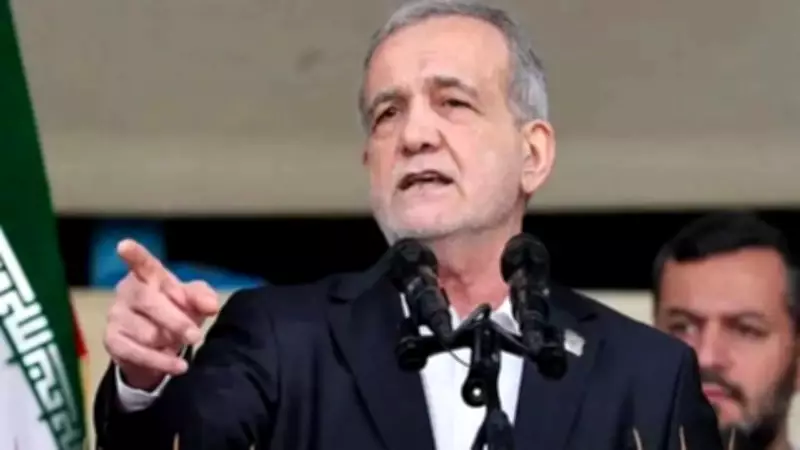
On Sunday, Iranian President Masoud Pezeshkian openly questioned the United States' authority to impose limits on Iran's nuclear program. He demanded to know what legal basis Washington has for such demands, highlighting ongoing tensions between the two nations.
Direct Criticism of US Stance
Speaking publicly, Pezeshkian directly criticized former US President Donald Trump, stating, "Trump says Iran cannot make use of its nuclear rights, but doesn't say for what crime. Who is he to deprive a nation of its rights?" This strong rhetoric underscores Iran's firm position on its nuclear sovereignty.
According to reports from Reuters, citing the Iranian Student News Agency, Pezeshkian argued that the US has no valid justification to deny Iran access to its own technology. His remarks come at a critical juncture as negotiations between Washington and Tehran continue, with both sides still deeply divided on key issues, particularly the nuclear program.

Negotiations and Ceasefire Deadline
A temporary ceasefire is set to expire on Wednesday, adding urgency to the talks. Late on Saturday, Iran's parliamentary speaker Mohammad Bagher Ghalibaf acknowledged some progress in discussions aimed at ending the conflict but emphasized that major differences remain.
In a televised address, Ghalibaf said, "We are still far from the final discussion. We made progress in the negotiations, but there are many gaps and some fundamental points remain." This indicates that while there have been steps forward, significant hurdles persist in reaching a comprehensive agreement.
Iran's Legal Arguments Against US Actions
Iran has consistently claimed that US and Israeli strikes violate the UN Charter, the Nuclear Non-Proliferation Treaty (NPT), and its sovereignty. Tehran argues that these actions lack congressional approval or justification based on an imminent threat.
Furthermore, Iran points out that no report from the International Atomic Energy Agency (IAEA) has conclusively proven any breaches of the NPT by Iran prior to these strikes. This stance is part of Iran's broader strategy to challenge the legitimacy of external pressures on its nuclear activities.
The ongoing diplomatic efforts highlight the complex interplay of legal, political, and security issues in the region. As the ceasefire deadline approaches, the international community watches closely to see if a breakthrough can be achieved or if tensions will escalate further.