India's Massive Tri-Service Exercise Trishul Concludes with Spectacular Display of Military Might
India's comprehensive tri-service military training program, Exercise Trishul, is reaching its conclusion with a major joint amphibious operation along the Saurashtra coast. The extensive exercise, spanning from the Thar Desert to the Kutch sector along India's western border with Pakistan, has demonstrated the armed forces' growing capabilities in both virtual and physical domains.
Multi-Domain Warfare Validation
The Southern Command of the Indian Army, headquartered in Pune, has been conducting a series of tri-services exercises under the overarching framework of Exercise Trishul. This represents the first large-scale tri-services military exercise along the western border since Operation Sindoor in May 2025.
The exercise has focused on validating full-spectrum land-sea-air integration while embodying the principles of JAI - Jointness, Atmanirbharta (self-reliance), and Innovation. Mission-focused validations were conducted across multiple domains including electronic warfare, cyber operations, drone and counter-drone operations, Intelligence, Surveillance and Reconnaissance (ISR), and Air Defence control systems.

According to an official army press statement, "The exercises reaffirm tri-service preparedness to dominate both virtual and physical domains through seamless land, sea, and air integration for coordinated joint operations."
Combat Operations Across Diverse Terrains
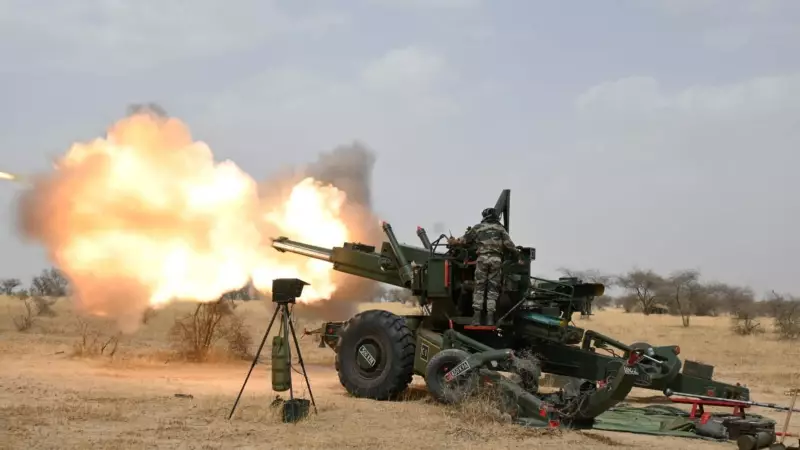
In the challenging terrain of the Thar Desert, Southern Command formations executed intense integrated maneuvers through Exercises Maru Jwala (Desert Fire) and Akhand Prahaar (Sustained Strike). These exercises validated combined arms operations, mobility, and joint fire integration under realistic combat conditions.
The desert training is set to culminate in a major combat exercise that will test precision targeting and multi-domain coordination, demonstrating the Army's commitment to transformation through rigorous training and operational validation.
Meanwhile, in the Kutch Sector, a joint exercise involving the Army, Navy, Air Force, Coast Guard, and Border Security Force rehearsed integrated operational capabilities in close coordination with civil administration. This reflects the military-civil fusion approach to integrated national security.
Amphibious Operations and Naval Power Projection
The final phase of Exercise Trishul features a Joint Amphibious Exercise off the Saurashtra Coast, showcasing beach landing operations by the Amphibious Forces of Southern Command. This critical component validates full-spectrum land-sea-air integration and underscores the Indian Armed Forces' ability to project power across multiple domains.
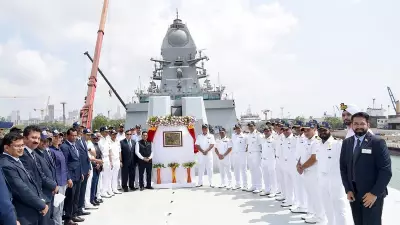
The Indian Navy's earlier statement revealed that Trishul included large-scale operations across the creek and desert sectors of Rajasthan and Gujarat, alongside comprehensive maritime operations in the North Arabian Sea. The exercise involved substantial deployment of Indian Navy warships, Indian Air Force fighter and support aircraft, and amphibious operations by the Indian Army and Navy.
Key naval assets participating included the Landing Platform Dock INS Jalashwa and Landing Craft Utility (LCU) vessels, demonstrating India's growing amphibious warfare capabilities.
Transformation and Future Readiness
Exercise Trishul serves as a testing ground for the Indian Army's Decade of Transformation initiative, built around five key pillars: Jointness and Integration, Force Restructuring, Modernisation and Technology Infusion, Improving Systems and Processes, and Enhancing Human Resource Skills.
The press statement emphasized that "Ex Trishul stands as a testament to the Armed Forces' commitment to Jointness, Atmanirbharta and Innovation" while reaffirming the military's resolve to "evolve continuously and remain a future-ready force capable of meeting emerging challenges across the full spectrum of conflict."

The participation of principal formations including Army Southern Command, Western Naval Command, South Western Air Command, along with Indian Coast Guard, Border Security Force, and other central agencies has significantly reinforced inter-agency coordination and integrated operations capabilities.