

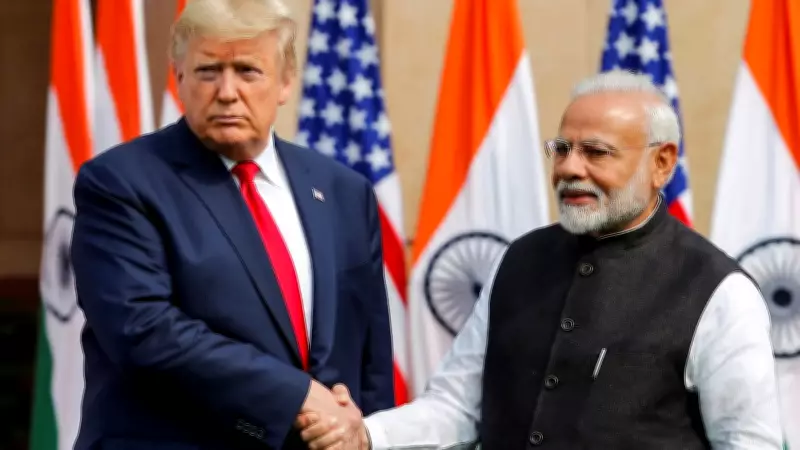
India's Strategic Autonomy Faces Credibility Test in US Trade Agreement
For decades, India has positioned itself not merely as a rising power but as a nation of principle. Strategic autonomy was presented as more than a diplomatic tactic; it was an ethical commitment to act independently, resist coercion, and anchor foreign policy in values alongside interests. In the post-colonial era, India aspired to be a moral voice for the Global South—non-aligned, sovereign, and credible. However, that credibility is now under scrutiny, not because India has chosen sides in a great-power contest, but because of perceived inconsistencies in its stance.
The Shift in India's Position on Russian Oil
For three years following Russia's invasion of Ukraine, India maintained a studiously neutral position. It abstained from United Nations condemnations, avoided labeling the conflict as "aggression," and framed it as a mere "conflict." The justification was consistently tied to energy security: discounted Russian crude oil was deemed essential to protect Indian households from inflation and shield the poor from economic hardship. At its peak, Russian oil accounted for over a third of India's imports, often at prices far below benchmark rates, stabilizing sectors like transport and agriculture.
Yet, with the signing of a US trade deal earlier this week after nearly a year of negotiations, India agreed to curb purchases of Russian crude and diversify away from Moscow. What was once described as an unavoidable necessity for survival suddenly became negotiable in exchange for tariffs and market access. This reversal raises critical questions: if energy security justified moral silence on Ukraine, why does it not justify resisting US pressure now? If discounted oil was existential, how could it be traded away in a commercial negotiation?

The Real Damage: Erosion of Trust and Credibility
The core issue is not about favoring Russia or the United States; it is about trust and consistency in foreign policy. India has long claimed to speak for the Global South, leveraging its anti-colonial legacy to advocate for sovereignty and resist coercion. By pricing its principles—first defending Russian oil imports as a matter of survival, then curtailing them for economic gain—India risks undermining its diplomatic standing. Countries that articulate norms and defend sovereignty must do so with clarity and consistency; otherwise, their credibility diminishes.
This shift does not imply that India should isolate itself or sacrifice economic growth for symbolism. Trade agreements and energy security are pragmatic necessities. However, arguing for three years that survival requires silence on aggression, only to reverse course when a better offer arrives, sends mixed signals. In diplomacy, reputation compounds slowly but can evaporate quickly. The world, particularly the Global South, takes note when a nation's stated principles appear negotiable.
India's Leadership Potential Amidst the Controversy
The tragedy lies in India's untapped potential for genuine global leadership. The country possesses demographic scale, robust economic momentum, technological talent, and a powerful anti-colonial legacy. It could speak with authority on issues like sovereignty, development, and fairness in global systems. However, leadership requires more than resources; it demands unwavering credibility. Three years of carefully defended "necessity" have collapsed with this single deal, highlighting the fragility of diplomatic reputation.
Ultimately, foreign policy runs on trust. India's ability to influence global norms and represent the interests of post-colonial nations hinges on its consistency. While pragmatism is unavoidable, a clear and principled stance is essential for long-term credibility. As India navigates complex international dynamics, balancing interests with values will be crucial to maintaining its role as a respected voice on the world stage.






