

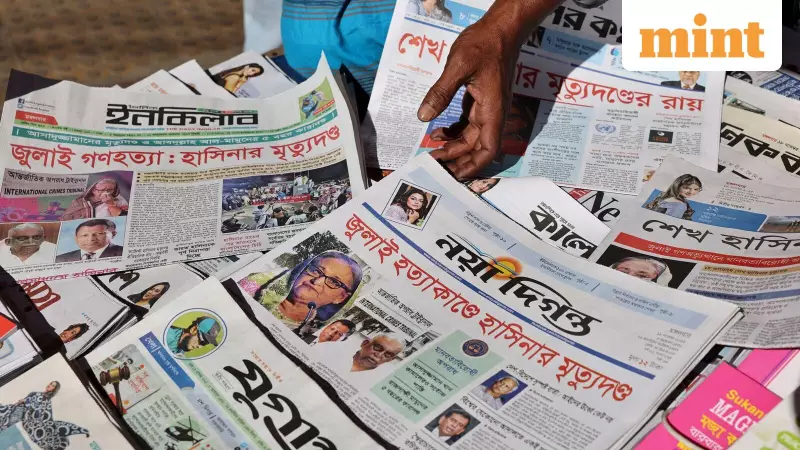
India faces a significant diplomatic challenge following the death sentence handed to former Bangladesh Prime Minister Sheikh Hasina by Bangladesh's International Crimes Tribunal. The verdict has sparked intense debate about New Delhi's legal obligations regarding her extradition.
The ICT Verdict and Its Implications
Sheikh Hasina, who has been living in exile in New Delhi since her ouster in August 2024, was sentenced to death in absentia on Monday by the International Crimes Tribunal. The tribunal found her guilty of crimes against humanity during the July 2024 uprising that left approximately 1,400 student protesters dead.
The court specifically convicted Hasina for inciting violence, ordering killings, and authorizing lethal force against predominantly student demonstrators. Two of her former officials - home minister Asaduzzaman Khan Kamal and police inspector general Chowdhury Abdullah Al-Mamun - faced similar charges in the same case.

Bangladesh's Demand for Extradition
Mohammed Yunus, chief adviser to Bangladesh's interim government, has asserted that India has an 'obligatory duty' to extradite the former prime minister following her conviction. Yunus hailed the ICT verdict as a moment of justice that acknowledges the suffering of student protesters during the 2024 demonstrations.
The timing of this development is particularly significant as Bangladesh prepares for elections early next year. Hasina remains a polarizing figure in Bangladeshi politics, and the verdict shapes narratives about accountability and judicial independence in the post-Hasina era.
India's Legal Position and Response
India's official response has been measured and diplomatic. In a statement issued on November 17, India noted the ICT verdict while reaffirming its commitment to the people of Bangladesh and their interests in peace, democracy, and stability.
Legal experts point to several exception clauses in the 2013 extradition treaty that India could invoke to deny Bangladesh's request:
- Dual criminality requirement (Articles 1 and 2): India could argue that the charged offenses don't constitute crimes under Indian domestic law
- Political character exception (Article 6(1)): Extradition can be refused if the offense is considered political in nature
- Good faith requirement (Article 8(3)): India could claim the request lacks good faith or isn't in the interests of justice
Additionally, India's own Extradition Act of 1962 provides further legal protection against surrendering individuals in politically sensitive cases.
Historical Context and Tribunal Controversy
Sheikh Hasina originally established the International Crimes Tribunal in 2009 to investigate crimes against humanity committed during Bangladesh's 1971 war of independence from Pakistan. However, the tribunal has faced consistent criticism from political opponents and human rights organizations throughout its existence.
Hasina has vehemently denied the charges, describing the tribunal as "rigged" and politically motivated. She maintains that while the situation escalated beyond control in July 2024, the events cannot be characterized as premeditated violence.
The former prime minister has defended her human rights record and highlighted her government's achievements in accelerating economic growth and national prosperity during her tenure.
Diplomatic Calculations and Regional Dynamics
India faces complex diplomatic considerations in balancing its relationship with Bangladesh's interim government while managing domestic and regional implications. New Delhi must weigh short-term diplomatic pressures against long-term strategic interests in its relationship with its eastern neighbor.
With public sentiment in Bangladesh still running high against Hasina, India appears to be adopting a pragmatic, wait-and-see approach. The government's emphasis on a people-centric policy suggests it will prioritize stability and democratic processes in Bangladesh over immediate extradition demands.
As the situation develops, India's decision will significantly impact bilateral relations and set important precedents for handling similar diplomatic challenges in the future.






