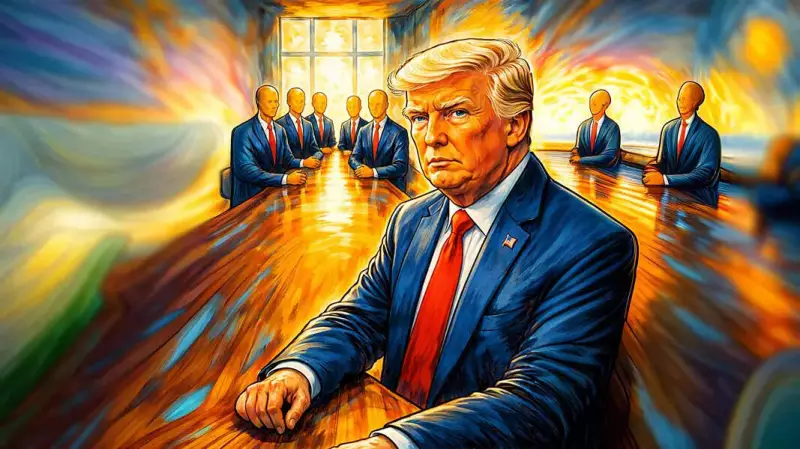
India's Strategic Questions on Trump's Permanent Peace Board Proposal
The announcement of Trump's Board of Peace for Gaza has arrived not as a diplomatic gift but with a substantial financial demand—a $1 billion price tag for permanence. This proposal has caught global leaders and seasoned diplomats off guard, presenting a significant departure from established international frameworks.
Divergence from UN Security Council Resolution 2803
This initiative stands in stark contrast to UN Security Council Resolution 2803 of November 2025, which authorized a Board of Peace specifically to oversee Gaza's postwar transition. The UN resolution established clear temporal boundaries with an end date of December 31, 2027, unless renewed through proper channels. It mandated six-monthly reporting to the Security Council, creating accountability mechanisms and preventing mission creep.
These restrictions were intentionally designed to ensure that an emergency governance tool would not transform into a self-sustaining global prototype. The UN framework recognized the temporary nature of postwar transitions and sought to prevent permanent international structures from emerging without proper multilateral consensus.

The Core Issue: Permanence and Portability
What Trump has proposed represents a fundamental shift—a permanent fixture rather than a time-bound mechanism. The Board of Peace charter describes the organization as an "international organization" with broad objectives including promoting stability, restoring lawful governance, and securing enduring peace in conflict-affected regions.
The language suggests this is less about Gaza specifically and more about creating a roving instrument of international governance. The framework appears portable across conflict theaters, unbounded by temporal limitations, and heavily dependent on its chairperson—Trump himself. This raises critical questions about accountability, sovereignty, and the balance of power in global conflict resolution.
Key Questions India Must Consider
Before formulating its position, India should address several strategic questions:
- How does this permanent structure align with India's longstanding commitment to multilateralism through established UN frameworks?
- What implications does a $1 billion funding requirement have for global resource allocation toward conflict resolution?
- How might this portable instrument affect regional sovereignty and self-determination in conflict zones beyond Gaza?
- What safeguards exist to prevent mission creep and ensure the Board remains focused on its stated objectives?
- How does this proposal impact the existing architecture of international peacekeeping and conflict resolution?
The Board of Peace proposal represents more than just a policy shift—it potentially reconfigures how international governance approaches conflict zones. As a rising global power with significant stakes in Middle Eastern stability, India's evaluation of this proposal will carry substantial weight in diplomatic circles worldwide.