Indian Foreign Secretary Holds Diplomatic Meeting with Bangladesh's Opposition Leader from Jamaat-e-Islami
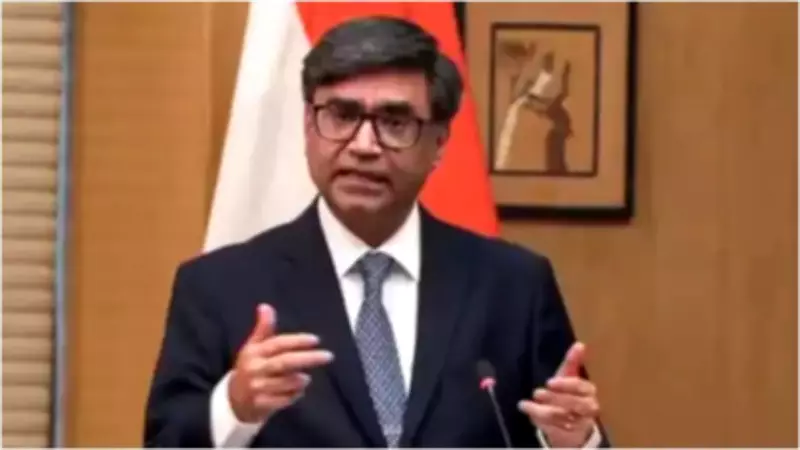
In a significant diplomatic engagement, Indian Foreign Secretary Vikram Misri held a courtesy meeting on Tuesday with Bangladesh's newly appointed Leader of the Opposition, Shafiqur Rahman, who also serves as the chief of the country's largest Islamist party, Jamaat-e-Islami (JeI). The meeting took place in Dhaka, marking a notable interaction between Indian officials and a party with a complex historical relationship with India.
Historical Context and Past Tensions
India and Jamaat-e-Islami have shared a troubled past, primarily due to the party's alignment with Pakistan during Bangladesh's 1971 War of Liberation. This historical backdrop has often cast a shadow over bilateral relations. Furthermore, during the BNP-Jamaat government two decades ago, the administration faced accusations of providing safe havens to Indian insurgent groups, adding to the strains.
The legal status of Jamaat-e-Islami has fluctuated over the years, with the party experiencing on-and-off bans. Notably, the ban was lifted during the term of an interim government, allowing the party to participate in political processes once again.

Details of the Meeting and Diplomatic Exchanges
The courtesy meeting was conducted on the sidelines of the swearing-in ceremony for the new government led by BNP chief and Prime Minister Tarique Rahman. During the discussions, Foreign Secretary Misri conveyed formal greetings to Shafiqur Rahman on his new role as Leader of the Opposition. He also reaffirmed India's enduring support to Bangladesh, emphasizing the people-centric nature of the bilateral ties that bind the two neighboring nations.
In response, Shafiqur Rahman highlighted the deep civilizational bonds shared by India and Bangladesh. He expressed optimism and hope for stronger bilateral relations moving forward, signaling a potential thaw in historical tensions through diplomatic dialogue.
Electoral Background and Political Landscape
The meeting occurs against the backdrop of recent electoral developments in Bangladesh. Out of the 300 seats in the parliamentary elections, results for two seats have been suspended, and election in one seat was cancelled following the death of a candidate. Of the remaining 297 seats, the BNP secured a majority with 209 seats, while Jamaat-e-Islami won 68 seats, solidifying its position as a key opposition force.
This diplomatic interaction underscores India's commitment to engaging with all political stakeholders in Bangladesh, regardless of historical complexities, to foster regional stability and cooperation.