India Confronts a Pivotal Diplomatic Crossroads Over Trump's 'Board of Peace' Proposal
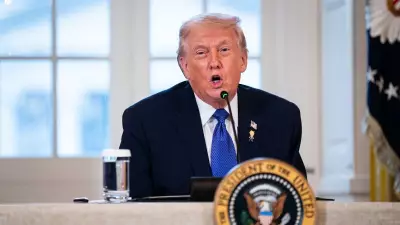
In a development that could significantly influence global diplomatic dynamics, India finds itself at a critical juncture regarding former United States President Donald Trump's suggested 'Board of Peace' initiative. This proposal, emerging from Trump's political circles, presents New Delhi with a stark and complex choice that may have far-reaching implications for its foreign policy and regional standing.
Understanding the 'Board of Peace' Concept and Its Global Implications
The 'Board of Peace' initiative, as outlined by Trump and his advisors, aims to establish a new international framework for conflict resolution and peacebuilding. While specific details remain under discussion, the board is envisioned as a mechanism to address global hotspots through a US-led approach, potentially bypassing traditional multilateral institutions like the United Nations. For India, a nation that has historically balanced its strategic autonomy with engagement in global forums, this proposal raises fundamental questions about alignment and sovereignty.
India's diplomatic calculus must consider several key factors:
- Strategic Partnerships: How participation might affect India's relationships with other major powers, including Russia and European nations.
- Regional Dynamics: The impact on South Asian stability, particularly concerning neighbors like Pakistan and China.
- Multilateral Commitments: Balancing this initiative with India's existing roles in organizations such as the UN Security Council and BRICS.
The Geopolitical Stakes for India in South Asia and Beyond
India's decision on the 'Board of Peace' is not merely a diplomatic formality; it carries substantial geopolitical weight. As the world's largest democracy and a rising global power, India's stance could influence how other nations respond to Trump's initiative. Moreover, in a region marked by tensions—from the India-China border disputes to the longstanding conflict with Pakistan—India's involvement or abstention could alter the balance of power.
Analysts suggest that joining the board might offer India a more prominent voice in US-led peace efforts, potentially enhancing its global influence. However, it could also risk alienating traditional partners and complicating its 'non-aligned' legacy. Conversely, opting out might preserve India's strategic flexibility but could marginalize its role in shaping new international norms.
Potential Scenarios and Long-Term Consequences for Indian Foreign Policy
The choice facing India is emblematic of broader shifts in global governance, where unilateral or bilateral initiatives increasingly challenge multilateral systems. Experts warn that this decision could set a precedent for how India navigates future US proposals under potential Trump administrations or similar political movements.
- Scenario 1: Conditional Engagement – India might participate with specific reservations, seeking to mold the board's agenda to align with its interests, such as focusing on terrorism or economic cooperation.
- Scenario 2: Cautious Abstention – New Delhi could decline involvement initially, monitoring the board's effectiveness before reconsidering, thus maintaining its diplomatic independence.
- Scenario 3: Active Leadership – India might embrace the opportunity to co-lead the initiative, positioning itself as a key peacebroker in Asia and beyond.
Each path carries risks and rewards, with implications for India's economy, security, and international reputation. As discussions around the 'Board of Peace' evolve, Indian policymakers are likely weighing these options against a backdrop of domestic priorities and global uncertainties.
In conclusion, India's response to Trump's 'Board of Peace' initiative represents more than a routine diplomatic decision; it is a test of the nation's evolving role on the world stage. With careful analysis and strategic foresight, India must navigate this choice to safeguard its interests while contributing to global stability.