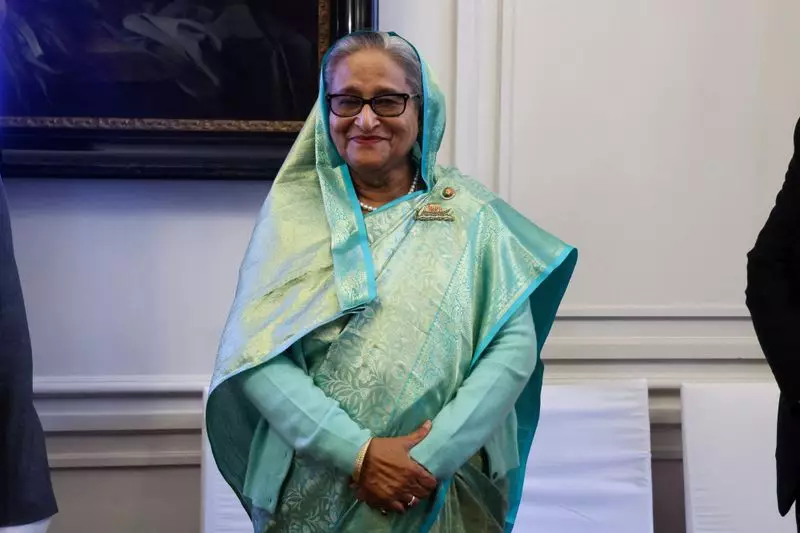
Former Indian diplomats have launched a strong criticism against a recent Bangladesh court verdict targeting Prime Minister Sheikh Hasina, describing the judicial process as nothing more than a "kangaroo court" driven by political motivations rather than legal merits.
Diplomats Unite Against Judicial Overreach
Several distinguished former Indian envoys who previously served in Bangladesh have collectively voiced their concerns about the controversial court decision. These seasoned diplomats, with extensive experience in India-Bangladesh relations, have questioned the timing and intent behind the legal proceedings against the sitting prime minister.
The verdict, delivered recently by a Bangladesh court, has sparked international attention and raised eyebrows among foreign policy experts across the region. The former Indian ambassadors emphasized that the judicial action appears designed to undermine Sheikh Hasina's leadership rather than serve genuine justice.

Questioning Judicial Independence
According to the veteran diplomats, the court proceedings lacked the fundamental principles of fairness and due process that characterize independent judiciaries. They pointed to several irregularities in how the case was conducted, suggesting that external political pressures may have influenced the outcome.
The timing of the verdict is particularly suspicious, coming at a crucial juncture in Bangladesh's political landscape, noted one former envoy who served as India's High Commissioner to Bangladesh. The diplomats argued that such judicial actions risk destabilizing the country and could have serious implications for regional stability.
These diplomatic veterans, who have spent decades nurturing India-Bangladesh relations, expressed concern that the court decision could negatively impact the bilateral relationship between the two neighboring countries. India and Bangladesh have enjoyed increasingly warm ties under Sheikh Hasina's leadership, with cooperation spanning security, trade, and connectivity projects.
Regional Implications and Future Concerns
The former envoys warned that targeting a democratically elected leader through questionable judicial means sets a dangerous precedent for the region. They emphasized that such actions could encourage similar tactics against elected governments elsewhere, potentially undermining democratic institutions across South Asia.
Several of the diplomats highlighted Sheikh Hasina's contributions to Bangladesh's economic development and social progress during her tenure. They noted that under her leadership, Bangladesh has achieved significant milestones in poverty reduction, women's empowerment, and economic growth.
The criticism from experienced Indian diplomats carries significant weight given their deep understanding of Bangladesh's political dynamics and their role in shaping India's foreign policy toward its important neighbor. Their collective voice adds to the growing international concern about the situation.
As the situation develops, the former envoys urged the international community to closely monitor events in Bangladesh and ensure that democratic processes and judicial independence are preserved. They emphasized that the ultimate decision about Bangladesh's leadership should rest with the Bangladeshi people through free and fair electoral processes, not through legally questionable court rulings.