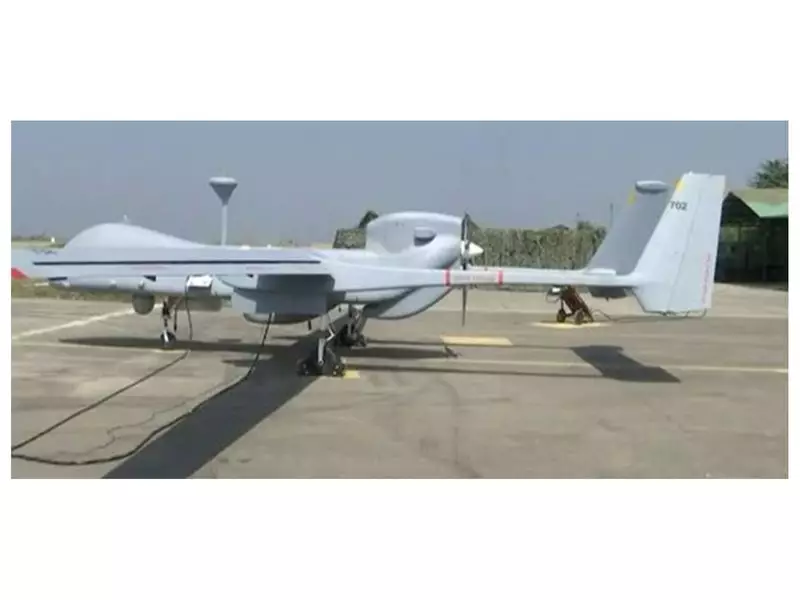
In a significant move to bolster its unmanned aerial surveillance capabilities, the Indian government is fast-tracking the acquisition of additional Heron MK-II drones from Israel. This decision comes directly on the heels of the successful deployment of these advanced unmanned aerial vehicles (UAVs) in a recent, sensitive intelligence operation.
The Catalyst: Operation SINDURA's Success
The immediate trigger for this accelerated procurement is the proven performance of the Heron MK-II drones during Operation SINDURA. This covert mission, conducted along the northern borders, demonstrated the system's exceptional capabilities in high-altitude, long-endurance surveillance. The drones provided the Indian Air Force (IAF) and intelligence agencies with critical, real-time data, validating their strategic value in complex operational environments.
The success of this operation has solidified the defense establishment's confidence in the platform. It underscored the urgent need to induct more of these sophisticated systems to maintain a persistent intelligence, surveillance, and reconnaissance (ISR) umbrella over vast and challenging terrains.
Strategic Details of the Enhanced Procurement
The new procurement plan is an expansion of an existing contract. India had initially signed a deal with Israel Aerospace Industries (IAI) for four Heron MK-II drones. Two of these have already been delivered and were instrumental in Operation SINDURA. The government is now moving to exercise an option to acquire the remaining two systems under the original agreement.
More importantly, discussions are underway for a follow-on order for at least four more Heron MK-II drones. This would significantly increase the fleet strength, providing the armed forces with greater operational flexibility and coverage. The Heron MK-II is a major upgrade over the older Heron-1 models currently in service. Key enhancements include:
- Superior satellite communication (SATCOM) capability, allowing for beyond-line-of-sight operations over thousands of kilometers.
- Increased payload capacity and advanced sensors for sharper imagery and data collection.
- Enhanced automation and operational efficiency for extended missions.
Implications for National Security and Border Defense
This push for more Heron MK-II drones is a clear indicator of India's focus on strengthening its aerial surveillance grid. The primary areas of deployment will be the Line of Actual Control (LAC) with China and the Line of Control (LoC) with Pakistan. The drones' ability to loiter for extended periods at high altitudes makes them ideal for monitoring troop movements, infrastructure development, and potential infiltration attempts in these sensitive regions.
The procurement aligns with the broader goals of the Indian Air Force's modernisation plans, which heavily emphasise network-centric warfare and integrated ISR assets. By layering the Heron MK-IIs with other assets like satellites, ground radars, and fighter aircraft, India aims to create a seamless and impenetrable surveillance shield.
This decision, driven by operational success, marks a shift from trial-based evaluation to confidence-based induction. It reflects a pragmatic approach to defense acquisitions, where systems that prove their worth in the field are prioritized for rapid scale-up. The move will not only enhance situational awareness but also serve as a potent deterrent, signaling India's commitment to securing its borders with cutting-edge technology.