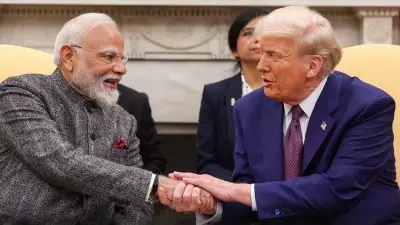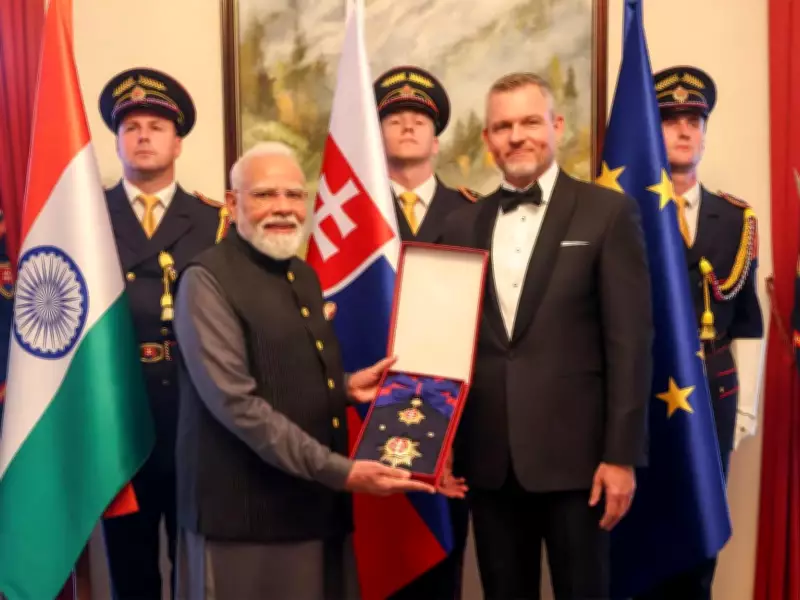
NEW DELHI: India and Slovakia elevated their bilateral relationship to a comprehensive partnership, exploring avenues for enhanced cooperation in defence and security, artificial intelligence, space, and civil nuclear energy. This development came as Prime Minister Narendra Modi became the first Indian premier to visit the central European nation since its independence in 1993.
Key Outcomes of the Bilateral Meeting
Following talks between PM Modi and Slovak Prime Minister Robert Fico, the two sides announced over a dozen agreements, including the establishment of a joint working group on counterterrorism, a letter of intent to promote defence cooperation, and a memorandum of understanding on labour migration. PM Modi is on a two-day visit to Bratislava and will return to France on Tuesday for the G7 summit.
UN Reforms and Multilateralism
PM Modi raised the issue of pending United Nations reforms during the meeting, stating in his media address that both leaders concurred that global institutions must adapt to the challenges and realities of the 21st century. “We will work to strengthen global efforts on this issue,” the PM said. A joint statement reaffirmed their commitment to multilateralism with the UN at its core and to a rules-based international order, while supporting comprehensive reforms of multilateral institutions, including the UN and particularly the UN Security Council, to make them more representative, inclusive, effective, and reflective of contemporary geopolitical realities. The statement added that India appreciated Slovakia’s continued support for India’s permanent membership in a reformed and expanded UNSC.

Dialogue and Diplomacy
The PM emphasized the importance of dialogue and diplomacy, noting that both leaders agreed all disputes must be resolved through peaceful means. India and Slovakia, the latter being a member of the EU and NATO, will continue to collaborate with their partners in this direction. With bilateral trade on the rise, the leaders discussed the early implementation of the India-EU Free Trade Agreement to enable traders, industries, and startups in both countries to maximize its benefits.
Counterterrorism Cooperation
The leaders condemned terrorism in all its forms and manifestations, including cross-border terrorism, and strongly denounced the Pahalgam terror attack of April 22, 2025. They agreed to establish a joint working group on counterterrorism and called for concerted international efforts to combat terrorism comprehensively and sustainably.
Trade and Connectivity
Discussions also covered the potential of Slovakia’s position as a central European transport hub and India’s large-scale manufacturing capabilities to boost trade and connectivity. The joint statement noted that they encouraged exploration of direct air connectivity between India and Slovakia to facilitate growing economic, business, and people-to-people exchanges. PM Modi and PM Fico supported the safe and legal mobility of skilled professionals, with the MoU on labour migration set to facilitate mobility and promote information exchange between relevant authorities in both countries.