In a firm diplomatic stance, India on Friday categorically stated that it does not recognise the China-Pakistan Economic Corridor (CPEC), emphasising that the project passes through Indian territory under the forcible and illegal occupation of Pakistan.
India's Unwavering Stance on Shaksgam Valley
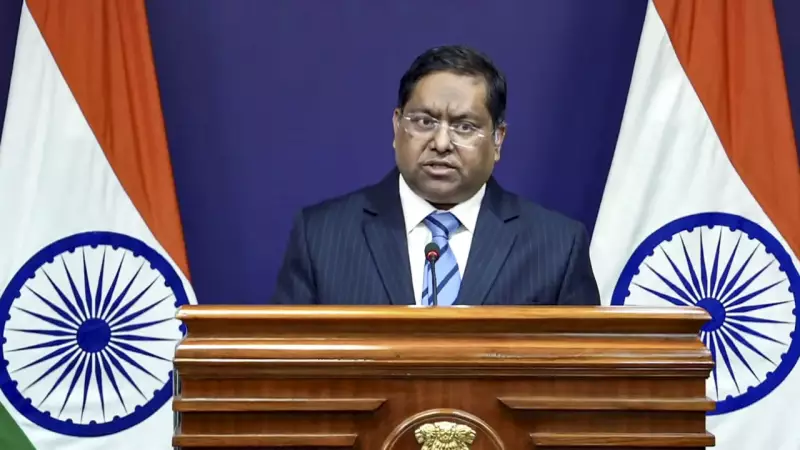
The Ministry of External Affairs (MEA) spokesperson, Randhir Jaiswal, explicitly addressed the issue, leaving no room for ambiguity. "Shaksgam Valley is Indian territory," Jaiswal asserted. He clarified that New Delhi has never accepted the legitimacy of the so-called China-Pakistan 'Boundary Agreement' that was signed back in 1963.
Jaiswal reiterated India's long-standing position, stating, "We have consistently maintained that the agreement is illegal and invalid." This statement reinforces India's official view that the pact, which ceded Indian territory in Pakistan-occupied Kashmir to China, holds no legal weight.

Protests and Reserved Rights
The spokesperson further revealed that India has repeatedly lodged protests with China regarding its activities in the Shaksgam Valley. "India had consistently protested to China against attempts to alter the ground reality in Shaksgam Valley," Jaiswal said.
In a significant remark hinting at future actions, the MEA official added a clear warning: "We further reserve the right to take necessary measures to safeguard our interests." This statement underscores India's commitment to protecting its territorial sovereignty and indicates that diplomatic and other options remain on the table.
Call for Restraint on Taiwan Issue
Separately, when questioned about the recent Chinese military exercises near Taiwan, the MEA spokesperson advocated for calm and dialogue. The ministry called for restraint from all parties involved in the tense situation.
India's position emphasised avoiding unilateral actions that could escalate tensions. The MEA urged for resolving all issues through peaceful means, aligning with its broader foreign policy principle of peaceful dispute resolution.
This dual-statement from New Delhi highlights its firm position on its own territorial integrity concerning Pakistan and China, while simultaneously promoting stability and peaceful dialogue in other regional flashpoints like the Taiwan Strait.