More than fifty years after the Indian Navy's decisive strikes on Karachi in the 1971 war, the silent realm beneath the waves is once again commanding New Delhi's strategic focus. As German Chancellor Friedrich Merz arrives in India for a two-day visit starting Monday, January 12, the spotlight intensifies on a landmark defence initiative: Project-75I. This ambitious program to acquire six next-generation submarines represents a critical juncture for India's naval power, driven by historical lessons, renewed regional tensions, and the urgent need to counter China's growing underwater footprint.
The Strategic Imperative Behind Project-75I
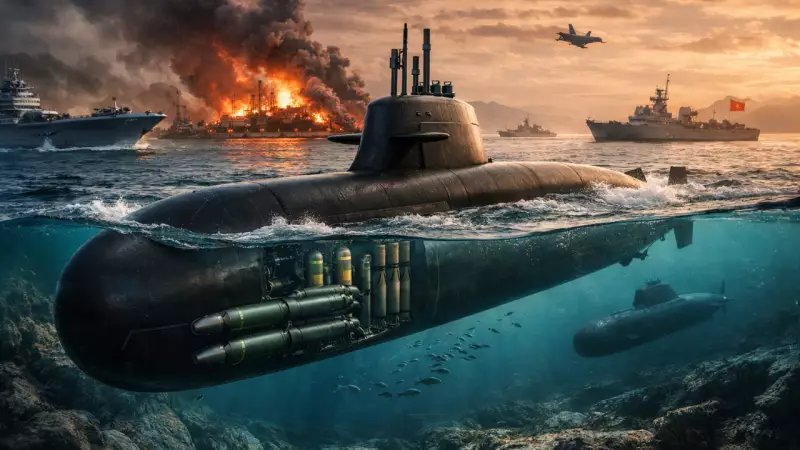
Project-75I is the Indian Navy's flagship endeavor to build six advanced diesel-electric submarines. These boats will be equipped with cutting-edge fuel-cell-based Air-Independent Propulsion (AIP), sophisticated sensors, and potent missile and torpedo systems. The Ministry of Defence issued the Request for Proposal in July 2021 under the Strategic Partnership Model, framing it as a cornerstone of the 'Make in India' initiative. The project's core objectives are indigenous construction, deep technology transfer, and fostering a domestic submarine-building ecosystem.
Initially estimated at over Rs 40,000 crore, the final contract value is now assessed to be closer to a staggering $8 billion (approximately Rs 72,000 crore), factoring in configuration and lifecycle support. For the Navy, this program addresses a pressing vulnerability. Its conventional submarine fleet is ageing rapidly, even as both China and Pakistan significantly ramp up their undersea activities in the Indian Ocean Region.

Why Germany's Type-214NG Won the Race
Defence sources confirm that the Indian Navy has chosen the German Type-214 Next Generation submarine, selecting it over the Spanish S-80 Plus offering from Navantia. The decision hinged on several key factors:
- Proven AIP Technology: The maturity and operational reliability of Germany's fuel-cell AIP system were decisive. AIP allows submarines to stay submerged for weeks without surfacing, drastically reducing detection risk.
- Acoustic Stealth: Superior quieting features make the Type-214NG exceptionally difficult to detect.
- Lower Lifecycle Risk: The established track record of the German design offered greater predictability and lower long-term operational hazards.
In the unforgiving domain of undersea warfare, where survival is paramount, proven capability trumped novelty. The Navy's choice reflects a pragmatic calculus focused on reliability and endurance in contested waters.
Make in India: Building Capability, Not Just Boats
At the heart of Project-75I is a transformative 'Make in India' mandate. All six submarines will be constructed domestically at Mazagon Dock Shipbuilders Limited (MDL). Germany's ThyssenKrupp Marine Systems (TKMS) will act as the design authority and technology partner, providing critical engineering expertise. The indigenous content is projected to start at around 45% for the first submarine and rise to nearly 60% for the sixth, aligning perfectly with the goals of Atmanirbhar Bharat.
This is not merely a procurement exercise. As emphasized in official statements, the project is designed to help India absorb complex submarine design and construction technologies, creating a lasting industrial legacy for future indigenous projects like Project-76.
The Twin Threats: Pakistan's Vulnerability and China's Expansion
India's submarine strategy is deeply informed by history and contemporary threats. The 1971 war demonstrated the devastating impact of sea denial when Indian attacks crippled Karachi, Pakistan's primary port and economic lifeline. This lesson was vividly recalled during Operation Sindoor in May 2025, when naval forces were put on high alert amid tensions with Pakistan. Karachi's enduring vulnerability underscores the deterrent power of a strong undersea fleet.

Beyond Pakistan, China presents a larger, long-term challenge. The People's Liberation Army Navy (PLAN) operates one of the world's largest submarine fleets, including nuclear-powered boats that now routinely patrol the Indian Ocean. Compounding this, China is supplying eight advanced Yuan-class AIP submarines to Pakistan, significantly boosting Islamabad's naval capability. For Indian planners, Project-75I is the essential response to this twin challenge, providing a survivable, persistent undersea force for monitoring, tracking, and sea-denial operations.
Scorpene Plan Paused, German Deal Accelerated
In a significant development reported in October 2025, India put on hold a parallel proposal to build three additional French-origin Scorpene submarines at MDL. While cost negotiations for that Rs 36,000 crore follow-on order were complete, the Cabinet Committee on Security clearance was withheld. Officials indicated the German submarines under P-75I were considered "a generation ahead" in technology. Concerns also existed about MDL's capacity to manage two complex submarine programs simultaneously.
This decisive push for P-75I followed extensive deliberations involving the Defence Ministry, the Navy, and the National Security Council Secretariat. Formal contract negotiations began in September 2025.
Merz's Visit and the Road Ahead
Chancellor Merz's visit provides high-level political momentum to the negotiations, though a final contract is not expected to be signed during the trip. Informed sources suggest a deal could be concluded within the next three months. For Germany, this represents a major opportunity to anchor a long-term defence industrial partnership with India. For New Delhi, it signifies a strategic diversification of its defence partnerships beyond traditional suppliers.
Once inducted, the six Type-214NG submarines will dramatically enhance the Indian Navy's capabilities for covert surveillance, precision strikes, and sea denial. More importantly, the project will catalyze a domestic industrial ecosystem for advanced submarine construction. From the burning docks of Karachi in 1971 to the silent, strategic depths of the Indian Ocean today, Project-75I marks one of India's most consequential naval decisions in decades, reshaping its maritime posture through indigenisation, deterrence, and strategic foresight.