As military tensions along the border paused in May 2025, a different kind of diplomatic offensive was launched in the corridors of power in Washington D.C. Newly disclosed records reveal a concerted lobbying effort by the Indian government to engage with key figures in the Trump administration, coinciding with a similar push by Pakistani officials.
India's Strategic Outreach to Trump's Inner Circle
Filings under the United States Foreign Agents Registration Act (FARA) show that on May 10, 2025, the very day Operation Sindoor was paused, New Delhi activated its lobbying channels in Washington. The Indian Embassy, through its registered lobbyist Jason Miller, placed four crucial calls to top US administration officials.
The recipients of these calls were Jamieson Greer at the US Trade Representative's office, Ricky Gill of the National Security Council, Steven Cheung from the White House, and Chief of Staff Susie Wiles. The initial discussions centered on media coverage of the military operation. However, the focus swiftly pivoted to trade negotiations, reflecting President Donald Trump's stated strategy of using a trade deal as leverage to de-escalate India-Pakistan hostilities.

This lobbying infrastructure was not hastily assembled. Since President Trump took office in January 2025, India has strategically hired two lobbying firms with deep ties to his inner circle. In April 2025, India retained SHW Partners LLC, led by Jason Miller—former chief spokesperson for Trump's 2016 campaign—on a $1.8 million annual contract. Later, in August 2025, the embassy signed Mercury Public Affairs on a $75,000 per month retainer. This firm counts Bryan Lanza, communications director for Trump's 2020 transition team, among its core members.
Pakistan's Parallel Diplomatic Campaign
While India was engaging its lobbyists, Pakistani officials were equally active. FARA records indicate that between the launch of Operation Sindoor and the eventual ceasefire, Pakistani officials sought over 50 meetings with senior US administration figures, lawmakers, and media outlets.
The Pakistani Embassy reached out through emails, phone calls, and in-person meetings to more than 60 officials and intermediaries. In a significant move following a meeting between Donald Trump and Asif Munir in September 2025, Islamabad hired an additional lobbyist. The Ervin Graves Strategy Group, led by former Republican Congressman Tom Graves, was enlisted on October 1, 2025, with a mandate to promote Pakistan's rare earth mineral potential to US stakeholders.
As of January 6, 2026, both nations have three active lobbying firms registered on their behalf in the US. India spends an estimated $225,000 per month on two of its lobbyists, while Pakistan allocates $300,000 across its three firms.
Lobbying for Access and Influence
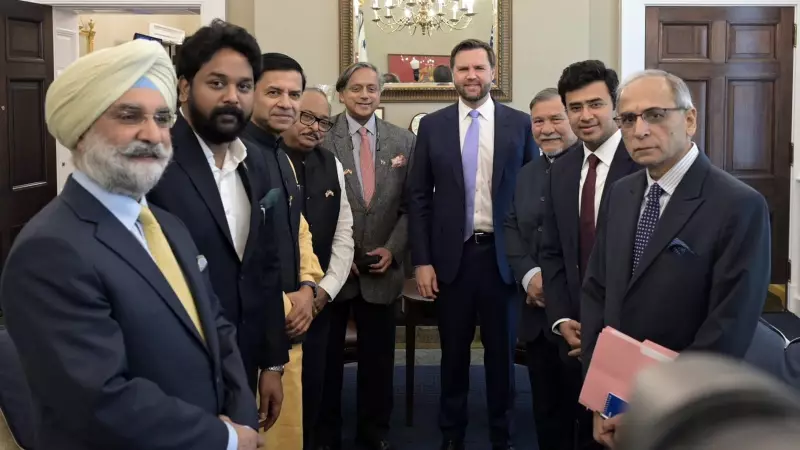
The filings also shed light on the granular work these lobbyists undertake. Ahead of a visit by an all-party parliamentary delegation from India, led by Congress MP Shashi Tharoor in June 2025, the Indian Embassy made several calls to senior White House officials to secure meeting times. The delegation subsequently met with US Vice President J.D. Vance and Deputy Secretary of State Christopher Landau, among others.
Mukesh Aghi, President of the US-India Strategic Partnership Forum, highlighted the strategic thinking behind India's choices. He noted that both Jason Miller and Susie Wiles are known to President Trump, with Wiles being a key figure in the Oval Office as Chief of Staff. "The current flavour of Washington is not bipartisan, but existing proximity to a core group of decision-makers," Aghi told The Indian Express.
This episode continues a long-standing tradition for India, which began hiring lobbying firms in Washington two decades ago, initially in response to sanctions after the 1998 Pokhran nuclear tests and later during the push for the civil nuclear deal.

The FARA disclosures underscore that modern diplomacy extends far beyond formal state channels. During a period of military pause, both India and Pakistan invested significant resources in shaping narratives, securing high-level access, and advancing their national interests through well-connected intermediaries in the world's most powerful capital.