India and Malaysia Deepen Comprehensive Strategic Partnership with Key Agreements
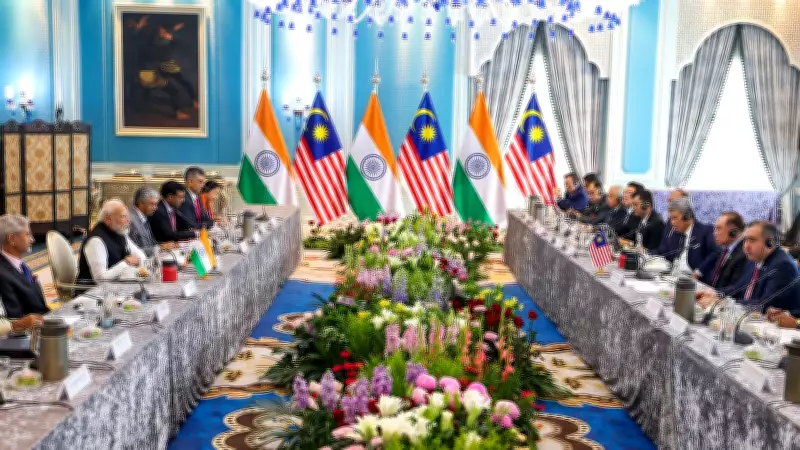
Prime Minister Narendra Modi engaged in extensive discussions with Malaysian Prime Minister Anwar Ibrahim in Putrajaya on Sunday, focusing on enhancing the Comprehensive Strategic Partnership between the two nations. The talks, which covered a broad spectrum of sectors, were followed by the exchange of multiple agreements and memoranda of understanding aimed at boosting strategic, economic, technological, and people-to-people engagement.
Focus on Technology and Innovation
The leaders placed special emphasis on advancing cooperation in artificial intelligence, defense, and semiconductor sectors. With Malaysia responsible for approximately 13% of global semiconductor trade, both nations agreed to integrate India's design capabilities with Malaysia's manufacturing and packaging strengths. This collaboration is seen as crucial for stabilizing supply chains against global disruptions, as highlighted by the official linkage between the Indian Electronics and Semiconductor Association (IESA) and its Malaysian counterpart (MSIA).
Defense and Security Enhancements
In the defense arena, Modi and Ibrahim welcomed the outcomes of the Malaysia-India Defence Cooperation Committee (MIDCOM) and its subcommittees. Key developments include the establishment of a Strategic Affairs Working Group (SAWG) and the Su-30 Forum. The Su-30 Forum facilitates technical expertise sharing, maintenance protocols, and spare parts strategies between the Indian Air Force (IAF) and the Royal Malaysian Air Force (RMAF), effectively overcoming supply chain challenges.

Economic and Energy Cooperation
The bilateral review encompassed trade, investments, digital technologies, fintech, renewable energy, education, healthcare, culture, and tourism. In the energy sector, Malaysia's PETRONAS and Gentari are expanding their presence in India's solar and green hydrogen markets, aligning with shared net-zero emission goals. Malaysia also expressed appreciation for India's initiative in establishing the International Solar Alliance (ISA), underscoring a mutual commitment to sustainable development.
Regional and Global Discussions
Beyond bilateral matters, the two Prime Ministers discussed key regional and global issues, reinforcing their stance on international cooperation. The agreements signed reflect a concerted effort to foster deeper integration and resilience in the face of evolving global dynamics, positioning both countries as pivotal players in the Indo-Pacific region.