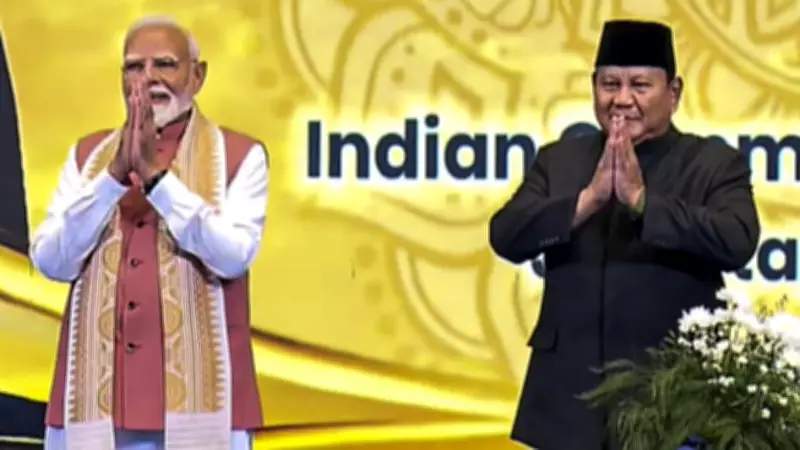
India has secured a significant strategic advantage against China through a series of defense and infrastructure agreements, including deals for BrahMos and Astra missiles and access to Indonesia's Sabang Port. The developments, announced on July 7, 2026, mark a new phase in India-Indonesia cooperation, extending to stainless steel and rare earth magnets.
Missile deals bolster India's defense posture
India and Indonesia finalized agreements for the supply of BrahMos supersonic cruise missiles and Astra beyond-visual-range air-to-air missiles. According to Indian defense officials, the BrahMos deal is valued at approximately $400 million, while the Astra contract is worth around $150 million. These missiles are expected to enhance Indonesia's maritime strike capabilities and air defense, while giving India a strategic foothold in Southeast Asia.
The BrahMos missile, jointly developed by India and Russia, has a range of 290-450 km and can be launched from ships, submarines, aircraft, or land-based platforms. The Astra missile, an indigenous Indian product, has a range of 110-160 km and is designed for air-to-air combat.

Sabang Port access strengthens Indian Navy presence
India has secured access to Sabang Port in Aceh, Indonesia, located near the Malacca Strait. This port will serve as a logistics hub for the Indian Navy, enabling quicker response times in the region. The agreement includes provisions for refueling, maintenance, and joint exercises. Analysts note that this move counters China's growing influence in the Indian Ocean, particularly at Hambantota in Sri Lanka and Gwadar in Pakistan.
Indian Prime Minister Narendra Modi stated, "This partnership with Indonesia is a cornerstone of our Act East policy, ensuring peace and stability in the Indo-Pacific region."
Stainless steel and rare earth magnets cooperation
Beyond defense, Indian and Indonesian companies agreed to collaborate on stainless steel production and rare earth magnets. Indonesia is the world's largest producer of nickel, a key component in stainless steel, while India has significant rare earth reserves. The partnership aims to reduce dependence on Chinese supply chains. According to the Indian Ministry of Commerce, bilateral trade in these sectors is expected to grow by 20% annually.
Indonesian President Joko Widodo remarked, "This cooperation will create jobs and boost our manufacturing sectors, benefiting both nations."
Strategic implications for India-China rivalry
The deals come amid ongoing border tensions between India and China in Ladakh. By deepening ties with Indonesia, India gains a strategic partner in ASEAN, countering Beijing's Belt and Road Initiative. The Sabang Port access allows India to monitor Chinese naval movements in the Malacca Strait, a critical chokepoint for global trade.
Defense expert Dr. Rakesh Sood noted, "These agreements represent a paradigm shift in India's maritime strategy, leveraging partnerships to secure sea lanes and deter aggression."
Implementation timeline and next steps
The missile deliveries are expected to begin in 2027, with technology transfer and joint production discussions underway. India and Indonesia have also agreed to hold annual naval exercises, with the first scheduled for October 2026. The Sabang Port facility is set to be operational for Indian use by early 2027.