India Officially Enters US-Led Pax Silica Strategic Alliance
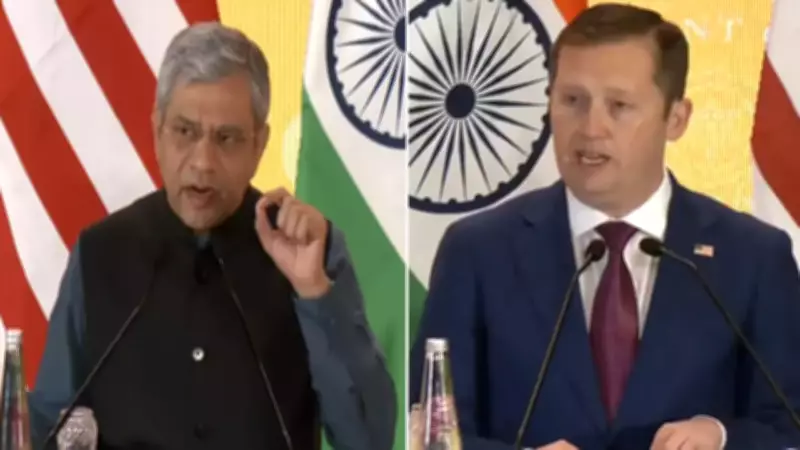
In a significant geopolitical and economic development, India formally joined the United States-led Pax Silica strategic alliance on Friday. The landmark move was marked by the signing of the Pax Silica Declaration, with Union Minister for Electronics and Information Technology Ashwini Vaishnaw and US Under Secretary of State for Economic Affairs Jacob Helberg presiding over the ceremony.
Strengthening Bilateral Ties and Technological Cooperation
This strategic entry follows an invitation extended by US Envoy Sergio Gor last month, as both nations continue efforts to finalize a proposed trade agreement and expand collaboration in emerging technologies and global supply chains. Hailing the agreement, Gor emphasized its transformative potential, stating, "India joins Pax Silica, the coalition that will define the 21st century economic and technological order."
The Pax Silica Declaration is specifically designed to build a secure, resilient, and innovation-driven ecosystem for critical minerals and artificial intelligence. It aims to reduce dependence on non-aligned nations and secure global AI and semiconductor supply chains, focusing on strengthening cooperation across the entire technology value chain—from raw materials to advanced infrastructure.

India's Semiconductor Ambitions and Talent Pool
Addressing the signing ceremony, Minister Ashwini Vaishnaw highlighted the broader vision behind India's participation. "India has become a part of the Pax Silica. This will greatly benefit India's electronics and semiconductor industry," he declared. Vaishnaw noted that ten semiconductor plants are already established or in the process of being established in India, with the first commercial production facility set to begin operations very soon.
He further revealed that Indian engineers are now domestically designing some of the world's most advanced 2-nanometer chips. Noting that the semiconductor industry will require approximately one million additional skilled professionals globally, Vaishnaw stressed that this talent is expected to come from India. "All this will continue, we have to move forward. The country has a direction, a clear goal, and we have to take global leadership in the semiconductor industry and the electronics industry," he asserted.
Strategic Importance and Future Implications
US Envoy Sergio Gor elaborated on the strategic significance of India's entry into the alliance. "India's entry into Pax Silica is not just symbolic. It is strategic and essential. India is a nation with deep talent, deep enough to rival challengers. India's engineering depth offers critical capabilities for this vital coalition," he stated.
Gor also pointed out India's important strides in critical mineral processing capacity, an area where the US is fully engaged. He emphasized that policies reinforcing US-India tech cooperation will power AI innovation and adoption for years to come. "We can share trusted AI technology with the world, and especially with partners like India," he added.
Alliance Objectives and Global Framework
The Pax Silica alliance, launched in December 2025, seeks to secure global AI and semiconductor supply chains while reducing reliance on non-aligned nations. The declaration recognizes that "a reliable supply chain is indispensable to our mutual economic security." It further notes, "We also recognize that artificial intelligence represents a transformative force for our long-term prosperity and that trustworthy systems are essential to safeguarding our mutual security and prosperity."
The document underscores that economic value and growth will flow through all levels of the global AI supply chain, driving historic opportunities and demand for energy, critical minerals, manufacturing, technological hardware, infrastructure, and new markets not yet invented.
Member Nations and Summit Background
India's entry adds its vast talent base, semiconductor ambitions, and strategic location to the alliance, positioning New Delhi to play a pivotal role in shaping the future economic and technological framework. Other member nations include:

- Australia
- Greece
- Israel
- Japan
- Qatar
- Republic of Korea
- Singapore
- United Arab Emirates
- United Kingdom
- United States
A Pax Silica Summit held in Washington on December 12 earlier brought partner nations together to endorse a shared vision of deeper economic and technology cooperation. One of the initiative's central pillars is the creation of a durable economic order to drive AI-powered prosperity across participating countries.