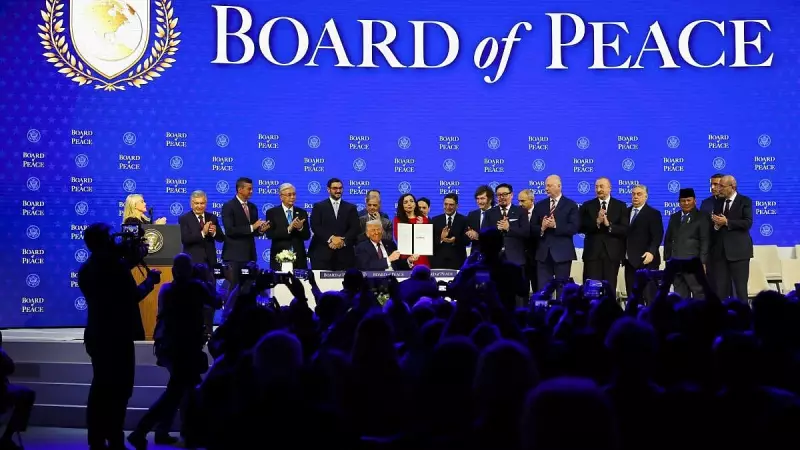
India, China, and France Absent at Trump's 'Board of Peace' Signing Ceremony
In a significant diplomatic development, India, China, and France were among the nations that did not attend the signing ceremony for former United States President Donald Trump's proposed 'Board of Peace' initiative. This absence underscores the complex geopolitical landscape and the cautious approach adopted by several major powers towards this new peace framework.
Diplomatic Reservations Evident Among Key Global Players
The ceremony, which aimed to formalize Trump's vision for a peace board intended to address international conflicts, saw a notable lack of participation from some of the world's most influential countries. India, a key player in South Asian and global affairs, chose to skip the event, reflecting potential concerns over the initiative's alignment with its foreign policy objectives and regional stability interests.
Similarly, China's absence highlights the ongoing tensions and strategic rivalries in international diplomacy, particularly with the United States. France, as a leading European Union member, also opted out, suggesting that European allies may have reservations about the initiative's structure or implications for multilateral peace efforts.

Implications for Global Peace and Diplomacy
The collective absence of these nations raises questions about the broader acceptance and effectiveness of the 'Board of Peace' in fostering global harmony. It points to a fragmented international response, where not all major powers are willing to endorse or participate in peace initiatives led by former U.S. administrations without clear consensus or detailed frameworks.
This event serves as a reminder of the delicate balance in international relations, where countries like India, China, and France prioritize their national interests and diplomatic strategies over unilateral or controversial proposals. The move could signal a preference for established multilateral platforms or bilateral negotiations in conflict resolution.
Looking Ahead: Future of Peace Initiatives
As global dynamics continue to evolve, the absence of key nations at such ceremonies may influence the trajectory of future peace efforts. It emphasizes the need for inclusive and widely supported mechanisms to address international disputes, rather than initiatives that face skepticism from significant global actors.
Observers note that this development could prompt a reevaluation of how peace initiatives are proposed and implemented, ensuring they garner broader international backing to be truly effective in mitigating conflicts worldwide.