

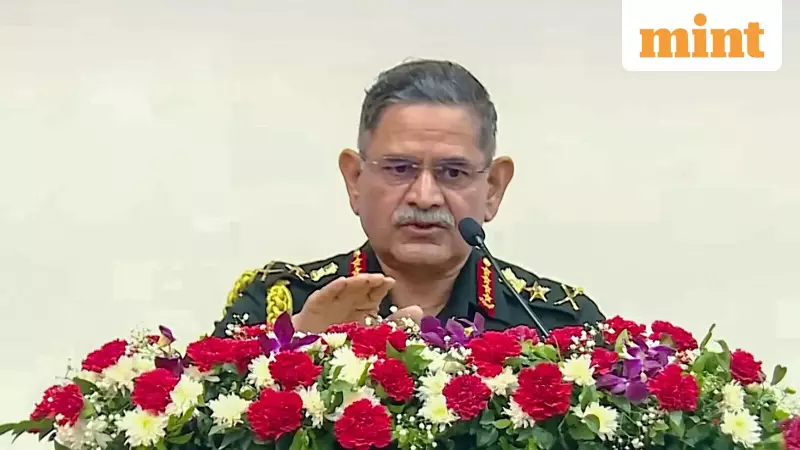
Top leaders in India and China are actively working to preserve peace along their shared border. They are making serious efforts to overcome the trust deficit between their militaries. This statement comes from Chief of Army Staff General Upendra Dwivedi.
High-Level Meetings Signal Urgency
General Dwivedi pointed to recent high-level meetings as evidence of this push. The Prime Minister, along with the Defense and Foreign Ministers, have engaged with their Chinese counterparts in the past few months. There is a strong and palpable sense of urgency within the Indian armed forces to maintain calm along the borders. This urgency reflects a shared desire to prevent further escalation.
Healing Relations After the 2020 Clash
These remarks underscore ongoing political efforts to mend a relationship that suffered a severe blow. The deadliest border clash in decades occurred in June 2020. That tragic incident claimed the lives of several Indian and Chinese soldiers. Since that confrontation, relations between the two Asian giants have been strained and complex.

Concrete Steps Toward De-escalation
In a positive development, both sides have agreed to withdraw troops from remaining friction points. This troop disengagement helped clear the path for a significant diplomatic visit. Prime Minister Narendra Modi traveled to China last August. This marked his first visit to the country in seven years, signaling a potential thaw.
During recent engagements, Indian representatives have consistently delivered a clear message. They emphasize that peace and stability along the 3,488-kilometer disputed Himalayan border are absolutely essential. This border tranquility is seen as the key foundation for restoring normal bilateral ties between the two nations.
Confidence-Building Measures Take Shape
Following Prime Minister Modi's meeting with Chinese President Xi Jinping last year, a series of confidence-building steps were initiated. One notable move was the resumption of direct flights between India and China. These vital air links were suspended during the Covid-19 pandemic and the subsequent border standoff. They finally resumed operations in October, reconnecting people and commerce.
Global Trade Context and External Pressures
This renewed engagement between India and China unfolds against a challenging global trade backdrop. Decisions by the United States, under the previous administration, imposed significant tariffs on both countries. These tariffs disrupted global trade flows considerably.
Indian exports to the US now face tariffs as high as 50 percent, among the steepest rates applied. Meanwhile, Beijing and Washington have negotiated a fragile and tenuous truce regarding their own tariff disputes and export controls. This external economic pressure adds another layer to the India-China dynamic.
Firm Stance on Shaksgam Valley
Separately, General Dwivedi recently reaffirmed India's firm position on the contentious Shaksgam Valley issue. He stated clearly that New Delhi views a 1963 agreement between Pakistan and China concerning the valley as "illegal." Addressing a press conference, the Army Chief reiterated the government's official stand.
He pointed out that the Ministry of External Affairs has already issued a detailed statement on this matter. "Therefore, concerning any activity in the Shaksgam Valley, we do not approve of it," General Dwivedi stated. "The joint statement issued in China regarding what I understand as CPEC 2.0, we do not accept it. We consider it an illegal action being carried out by the two nations."
Strategic Geography of Shaksgam Valley
The Shaksgam Valley holds significant strategic importance. It shares its northern boundary with China's Xinjiang Province. To its south and west, it lies adjacent to northern areas of Pakistan-occupied Jammu and Kashmir. The valley is bordered by the sensitive Siachen Glacier region to the east. India's consistent position is that all such agreements on disputed territories lack legal validity.






