India has issued a significant call for restraint and the de-escalation of tensions in the Indo-Pacific region. This diplomatic move comes as a direct response to China's recent large-scale military exercises conducted around Taiwan.
New Delhi's Diplomatic Stance on Regional Tensions
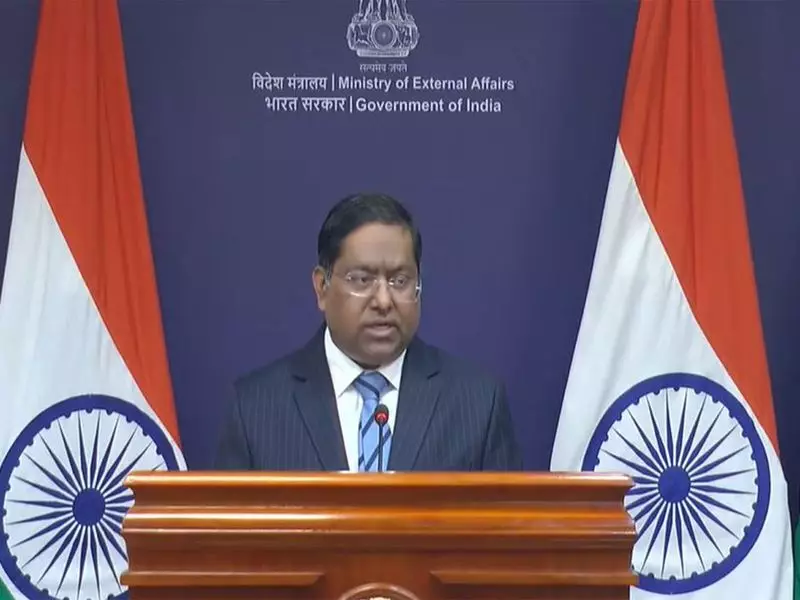
The Ministry of External Affairs (MEA) articulated India's position, emphasizing the critical importance of maintaining peace and stability across the Indo-Pacific. An official spokesperson for the MEA stated that India is closely observing the evolving situation. The core of New Delhi's message was a firm advocacy for exercise of restraint, avoidance of unilateral actions, and de-escalation of tensions.
The spokesperson underscored that differences between nations should be resolved through respectful dialogue and peaceful means, adhering to the established principles of international law. This statement, delivered on Thursday, reflects India's consistent policy of promoting a rules-based order in the strategically vital region.

Context: China's "Joint Sword-2024A" Military Drills
India's calibrated response was triggered by China's initiation of the "Joint Sword-2024A" military exercises, which commenced just days ago. These extensive drills, involving the army, navy, air force, and rocket force, are being conducted in multiple zones encircling Taiwan. Chinese authorities have described the operations as a form of "strong punishment" for what they term as separatist activities by Taiwan's ruling party.
Furthermore, China framed the exercises as a stern warning against external interference and support for Taiwan independence forces. The drills are a palpable demonstration of military might in the Taiwan Strait, the East China Sea, and other proximate areas, significantly raising the temperature in one of Asia's most sensitive geopolitical flashpoints.
Implications for Regional Security and India's Role
India's call for restraint places it as a responsible stakeholder concerned with broader regional stability. The Indo-Pacific, a maritime space of immense economic and strategic importance, has witnessed increasing military posturing and complex rivalries. By publicly advocating for dialogue and de-escalation, New Delhi reinforces its commitment to a free, open, and peaceful region, a principle it shares with many other nations.
The situation remains fluid, with the international community closely monitoring Chinese military movements and Taiwan's response. India's statement, while not directly taking sides, highlights the potential for such exercises to disrupt the delicate balance. It serves as a reminder of the global stakes involved in maintaining open channels of communication and preventing any miscalculation that could lead to a wider conflict.
The development underscores the interconnected nature of security in Asia, where actions in one theatre have immediate ramifications across the entire Indo-Pacific. India's diplomatic intervention, therefore, is seen as a measured effort to counsel moderation and uphold the primacy of peaceful dispute resolution during a period of heightened volatility.