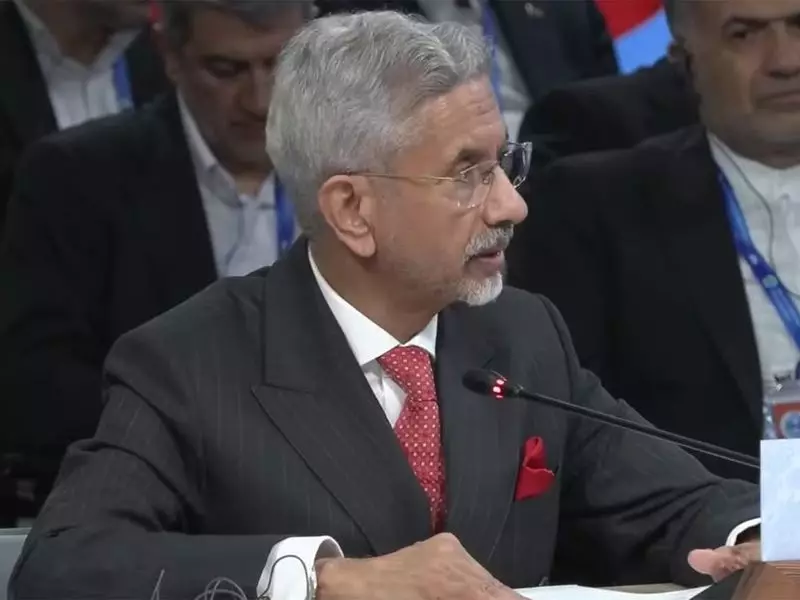
In a powerful address that resonated across the international diplomatic community, India's External Affairs Minister Dr. S. Jaishankar delivered an unequivocal message about the nation's right to defend itself against terrorism. Speaking at the Shanghai Cooperation Organisation (SCO) Summit in Astana on July 4, 2024, the minister left no room for ambiguity regarding India's position on cross-border terrorism.
No Tolerance for Terrorism: India's Clear Message
During his intervention at the extended format meeting of the SCO Council of Heads of State, Dr. Jaishankar articulated India's firm stance with memorable clarity. "There can be no justification for terrorism, and it must be stopped in all its forms and manifestations," he declared, emphasizing that the international community cannot afford to look away from this pressing global threat.
The minister's words carried significant weight given the timing and platform. The SCO summit, attended by leaders and representatives from member states including China, Russia, Pakistan, and Central Asian nations, provided a crucial stage for India to reinforce its national security priorities. Dr. Jaishankar specifically highlighted that "the fight against terrorism is one of the original mandates of the SCO," reminding all member states of their collective responsibility in this critical area.

Asserting India's Right to Self-Defense
In what many analysts are interpreting as a direct message to neighboring Pakistan and the broader international community, Dr. Jaishankar firmly stated that India has every right to defend itself against cross-border terrorism. This assertion comes against the backdrop of ongoing security challenges that India has faced from terrorist groups operating across its borders.
The minister's formulation - "no justification, no looking away, and no whitewashing" - represents a comprehensive approach to dealing with terrorism that leaves no loopholes for perpetrators or their supporters. This three-pronged formulation addresses the common tactics used to deflect responsibility for terrorist activities and ensures that the focus remains squarely on accountability and action.
Dr. Jaishankar's presence at the summit was particularly noteworthy as he was representing India at the highest level of the SCO gathering. The summit saw participation from prominent world leaders including Chinese President Xi Jinping, Russian President Vladimir Putin, and Pakistani Prime Minister Shehbaz Sharif, making the platform ideal for delivering India's unambiguous message on counter-terrorism.
Broader Implications for Regional Security
Beyond the immediate context of bilateral relations, India's strong stance at the SCO carries significant implications for regional security architecture. The minister's remarks reinforce India's position as a responsible power committed to maintaining regional stability while firmly protecting its national security interests.
The timing of this statement is crucial, as it comes when global attention is divided among multiple conflicts and security challenges. By choosing the SCO platform to deliver this message, India has effectively internationalized its concerns about cross-border terrorism while seeking collective action from regional partners.
India's participation in the SCO has always been strategic, balancing engagement with regional powers while maintaining clarity on core national security interests. Dr. Jaishankar's latest intervention demonstrates this balanced approach - engaging constructively with regional cooperation mechanisms while unambiguously stating non-negotiable security priorities.
The minister's strong wording suggests that India will continue to pursue an assertive foreign policy when it comes to matters of national security, particularly terrorism. This approach aligns with India's growing stature as a global power that expects the international community to address its legitimate security concerns with the seriousness they deserve.

As the SCO continues to evolve as an important regional organization, India's clear articulation of its counter-terrorism stance sets the stage for more robust discussions on regional security cooperation. The message from Astana is clear: India will not compromise on its security, and expects all nations, particularly those in its neighborhood, to take concrete, verifiable actions against terrorist groups operating from their soil.