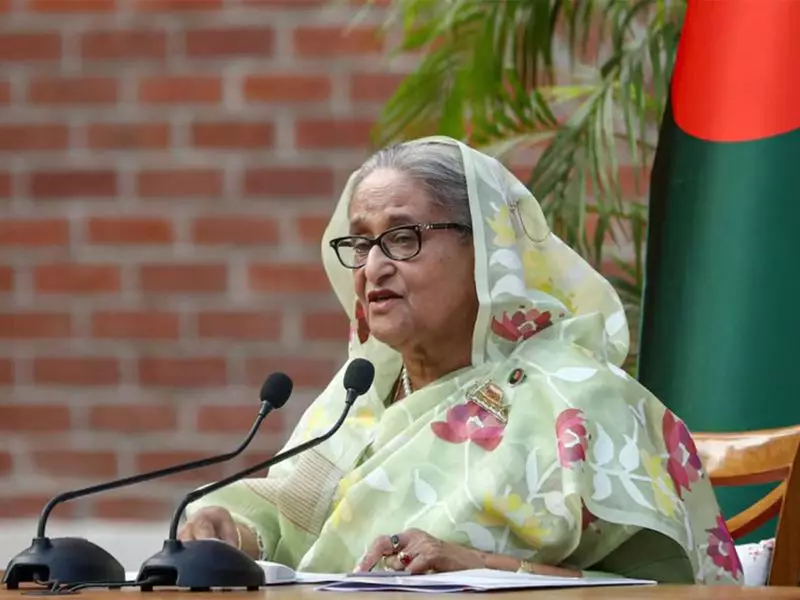
Bangladesh's Prime Minister Sheikh Hasina has delivered a sharp rebuke to Nobel Peace Prize laureate Muhammad Yunus, stating unequivocally that he possesses no mandate to reshape the country's foreign policy. This strong statement comes in response to recent comments made by Yunus during a visit to the United States, which have ignited a significant political and diplomatic controversy.
The Core of the Controversy
During his trip to the US, Muhammad Yunus, the founder of Grameen Bank and a renowned figure internationally, reportedly engaged in discussions concerning Bangladesh's political landscape and its relations with foreign nations. While the precise content of his private conversations has not been fully disclosed, they were perceived by the ruling Awami League government as an attempt to influence external actors regarding Bangladesh's internal affairs.
Prime Minister Hasina, addressing the issue directly, made it clear that foreign policy is the sole prerogative of the elected government. She emphasized that Yunus, despite his global stature as a Nobel laureate, is a private citizen and does not represent the state or its people in diplomatic matters. Her remarks underscore a firm stance against any external or internal efforts seen as interfering with the nation's sovereign decision-making.

Hasina's Firm Stance on Sovereignty
In her response, Sheikh Hasina articulated a principle central to her administration's governance: the integrity of Bangladesh's sovereign choices. She pointedly questioned the authority behind Yunus's actions, framing them as an overreach. The Prime Minister's comments reflect a broader sensitivity within her government regarding international perceptions and engagements, especially from figures who are often seen as critics of the current administration.
This incident is not an isolated one in the complex relationship between Hasina's government and Yunus. The microfinance pioneer has faced legal challenges in Bangladesh in recent years, which his supporters describe as politically motivated. This latest exchange adds a diplomatic dimension to their longstanding tensions, pulling international observers and foreign governments into the fray.
Implications for Bangladesh's International Relations
The public admonishment of Yunus by the Prime Minister sends a clear signal both domestically and internationally. Domestically, it reinforces the government's position as the only legitimate voice on state matters. For the international community, particularly nations like the United States, it highlights the delicate nature of engaging with diverse actors within Bangladesh.
The episode raises important questions about the role of global civil society figures in the politics of their home countries. While Yunus's Nobel Prize grants him a platform, Hasina's retort firmly draws a line between advocacy and official policy formulation. The government's message is that diplomatic outreach and foreign policy alignment are strictly governmental functions, not to be conducted by individuals without a state mandate.
As this story develops, it is likely to fuel further debate on democracy, dissent, and diplomacy in Bangladesh. The clash between a globally celebrated Nobel laureate and a powerful, long-serving Prime Minister encapsulates the ongoing struggle for narrative and influence in the nation's political sphere, with significant ramifications for its foreign partnerships.