Global South Poised To Define The Next World Order, Western Leaders Acknowledge
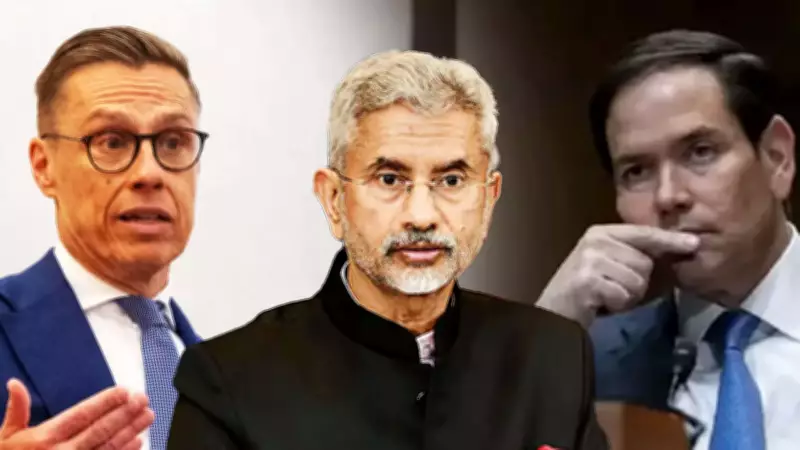
From the prestigious Munich Security Conference, a significant declaration has emerged, signaling a profound transformation in global geopolitics. Finland's President Alexander Stubb delivered a powerful statement, asserting that the emerging nations of Asia, Africa, and Latin America are set to shape the forthcoming world order. This perspective marks a clear departure from the traditional Western-dominated framework.
Rubio's Candid Admission Of A Changed World
Stubb's remarks were closely followed by a candid admission from US Secretary of State Marco Rubio, who acknowledged that the world he grew up in no longer exists. This recognition from a key Western diplomat underscores the irreversible shift in global dynamics, where established powers are coming to terms with new realities.
India's Multipolar Vision Gains Validation
For India, this moment represents a significant validation of its long-standing foreign policy stance. New Delhi has consistently championed the cause of multipolarity, arguing that global influence must be more equitably shared. The nation has emphasized that emerging economies deserve a substantially greater role in international decision-making processes.

External Affairs Minister S. Jaishankar has frequently articulated this position, stressing that contemporary power extends beyond military might to encompass critical domains such as trade, energy security, technological innovation, and control over vital resources.
The Munich Debate As A Turning Point
The discussions at Munich are being viewed as a potential turning point in international relations. For the first time, prominent Western leaders are openly acknowledging what India and numerous developing nations have asserted for years: the global balance of power is undergoing a fundamental and lasting shift.
This evolving consensus suggests that the era of unilateral or bipolar dominance is giving way to a more complex, multipolar system where the voices and interests of the Global South will carry unprecedented weight in shaping global norms, economic policies, and security architectures.