Ex-Pakistan Diplomat Issues Provocative Nuclear Threat Against India
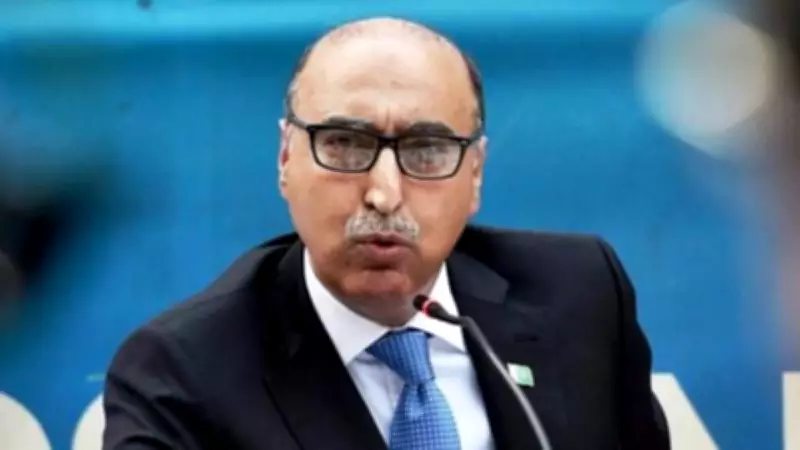
In a startling statement that has escalated regional tensions, former Pakistani envoy Abdul Basit has threatened to bomb the Indian cities of Mumbai and Delhi if the United States were to launch an attack on Pakistan's nuclear facilities. This provocative declaration, made in a recent interview, has been widely condemned as a 'hollow threat' aimed at intimidating India and drawing international attention to Pakistan's nuclear posture.
Abdul Basit's Controversial Remarks
Abdul Basit, who previously served as Pakistan's High Commissioner to India, asserted that Pakistan would not hesitate to retaliate against Indian urban centers in the event of a US-led assault on its nuclear arsenal. He argued that such a response would be a strategic necessity to deter foreign aggression and protect Pakistan's sovereignty. Basit's comments come amid ongoing geopolitical friction in South Asia, where nuclear capabilities are a central point of contention.
Basit emphasized, "If the US targets our nuclear assets, we will have no choice but to strike back at India's major cities like Mumbai and Delhi. This is not a bluff; it's a clear warning to those who underestimate our resolve." However, analysts have quickly dismissed this as a rhetorical ploy, noting that it lacks substantive military backing and is likely intended to rally domestic support and project strength internationally.

Regional and Global Implications
The threat has sparked immediate concern among security experts and policymakers, who warn that such statements could destabilize the already fragile peace between India and Pakistan. India, a nuclear-armed nation itself, has maintained a policy of no-first-use, but Basit's remarks challenge this dynamic by introducing a scenario of preemptive retaliation. This escalation in rhetoric comes at a time when both countries are navigating complex diplomatic relationships with global powers, including the US.
International observers have pointed out that Basit's threat is part of a broader pattern of Pakistan using nuclear saber-rattling to counter perceived threats from India and the West. The US has historically been involved in non-proliferation efforts in the region, and any direct confrontation over nuclear assets could have catastrophic consequences, potentially drawing in other nations and triggering a wider conflict.
Analysis of the 'Hollow Threat'
Experts have labeled Basit's statement as a 'hollow threat' due to several factors:
- Lack of Credibility: Pakistan's nuclear doctrine is primarily defensive, focused on deterring India, and such an aggressive move would likely be counterproductive, risking severe international backlash.
- Diplomatic Fallout: Threatening civilian centers like Mumbai and Delhi violates international norms and could isolate Pakistan further on the global stage, undermining its diplomatic efforts.
- Military Realities: Any attack on Indian cities would provoke a massive retaliation, making the threat impractical and unlikely to be executed, as it would lead to mutual assured destruction.
Moreover, Basit's status as a former diplomat, rather than a current official, suggests that this may be an attempt to influence public opinion rather than state policy. Indian authorities have downplayed the threat, reiterating their commitment to peace and security while urging Pakistan to refrain from inflammatory rhetoric.
Broader Context and Future Outlook
This incident highlights the ongoing volatility in South Asia, where nuclear posturing remains a tool for political messaging. As tensions simmer, both India and Pakistan face the challenge of managing their bilateral relations without escalating into open conflict. The international community, particularly the US, is likely to monitor the situation closely, advocating for dialogue and restraint to prevent any miscalculations.

In conclusion, while Abdul Basit's threat to bomb Mumbai and Delhi if the US attacks Pakistan's nukes has captured headlines, it is largely seen as a hollow gesture aimed at projecting strength. The real test will be whether such rhetoric translates into actionable policy or fades as another episode in the region's complex geopolitical drama. For now, stability hinges on continued diplomatic engagement and a commitment to peaceful resolution of disputes.