Former NATO Leader Reveals Critical 2022 Decision
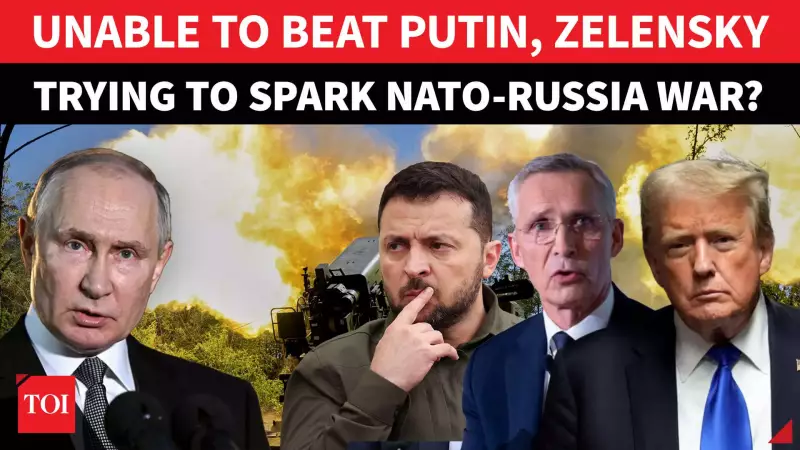
In a startling revelation that has sent shockwaves through international diplomatic circles, former NATO Secretary General Jens Stoltenberg has disclosed how he rejected Ukrainian President Volodymyr Zelensky's desperate plea for a no-fly zone in 2022, a decision he describes as both "painful" but necessary to prevent direct military confrontation between NATO and Russia.
The Dangerous Brinkmanship of 2022
During a comprehensive interview with The Times published on November 9, 2025, Stoltenberg reflected on his decade-long leadership of the military alliance, covering critical periods from the chaotic fall of Kabul to Russia's full-scale invasion of Ukraine. The most explosive revelation concerns the early days of the Ukraine conflict when President Zelensky made an emotional appeal for Western nations to establish a no-fly zone over his country.
Stoltenberg explicitly stated that approving such a measure would have inevitably triggered a direct war between NATO and Russian forces, creating a scenario that could have rapidly escalated into a broader global conflict potentially involving nuclear powers. The former NATO chief characterized this as one of the most difficult decisions during his tenure, acknowledging the moral weight of denying Ukraine crucial air protection while recognizing the catastrophic consequences of alternative action.

Broader Implications and Future Concerns
Beyond the no-fly zone revelation, Stoltenberg's interview touched on several other significant issues:
He admitted that NATO's support for Ukraine was initially delayed, allowing Russian forces to make significant early gains in the conflict. The former secretary general also discussed important lessons learned from the alliance's withdrawal from Afghanistan, drawing parallels between the two major international crises that bookended his leadership period.
Interestingly, Stoltenberg also provided insights into his current role as Norway's Finance Minister, marking a significant career transition from international security to economic management. His comments come at a time of heightened global tensions, with multiple conflict zones testing international diplomatic frameworks.
The revelations have sparked immediate reactions across political and military analysts, with many debating whether Stoltenberg's decision ultimately prevented World War III or unnecessarily prolonged Ukraine's suffering. As the conflict continues, these disclosures provide crucial context for understanding the delicate balance Western leaders have maintained between supporting Ukraine and avoiding direct confrontation with nuclear-armed Russia.