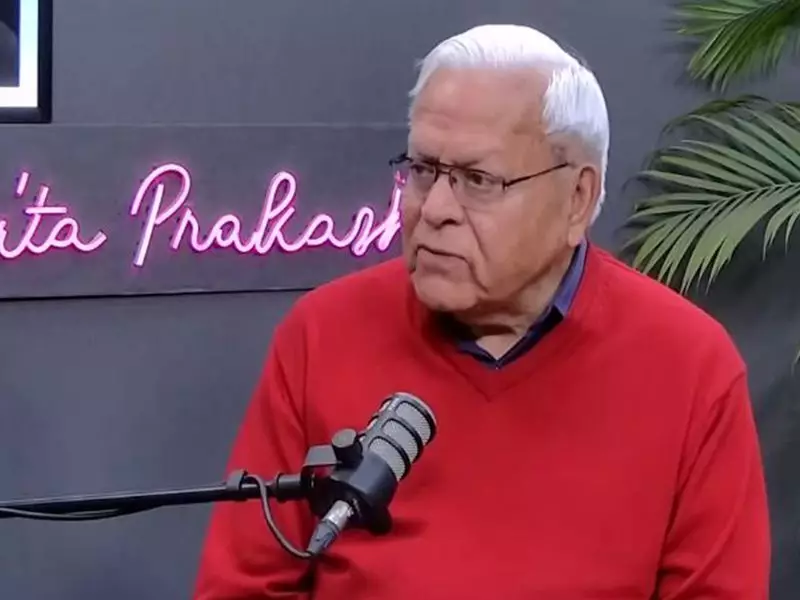
In a significant analysis of the ongoing political turmoil in Venezuela, former Indian Ambassador Ashok Sajjanhar has stated that the nation's crucial power centres—the armed forces and law enforcement agencies—continue to stand firmly behind President Nicolás Maduro. This unwavering support, according to the seasoned diplomat, is the primary factor preventing the opposition from dislodging the controversial leader from power.
The Pillars of Maduro's Power
Ashok Sajjanhar, who served as India's Ambassador to several countries, provided a clear-eyed assessment of the Venezuelan situation. He emphasised that despite severe international pressure, crippling economic sanctions, and widespread domestic discontent, the loyalty of the Venezuelan National Bolivarian Armed Forces (FANB) and the police forces remains the bedrock of the Maduro regime. This institutional backing has effectively neutralised numerous attempts by opposition leader Juan Guaidó and his international allies to instigate a change in government.
The former envoy pointed out that the military's allegiance is not merely ideological. It is underpinned by practical considerations. Over the years, Maduro, and his predecessor Hugo Chávez, have cultivated deep ties with the military's top brass, granting them significant control over key economic sectors. Many high-ranking officers hold influential positions in state-run companies overseeing oil, mining, and food distribution. This intertwining of military and economic interests creates a powerful incentive for the armed forces to maintain the status quo.

International Stalemate and India's Stance
Sajjanhar's observations shed light on why the intense international campaign led by the United States and several Latin American nations has failed to achieve its objective. Recognising Juan Guaidó as the interim president was a bold political move, but without the defection of the military, it lacked the necessary force to translate into a tangible transfer of power. The situation has resulted in a protracted stalemate, with Venezuela hosting two parallel governments—one led by Maduro in Caracas and another by Guaidó, recognised by over 50 nations.
Regarding India's position, the analysis reflects New Delhi's traditionally cautious and principled approach to such internal crises. India has not formally recognised Guaidó's government and has called for a peaceful, democratic, and constitutional resolution without external intervention. This stance prioritises dialogue and respects the sovereignty of nations, while also being mindful of India's own energy interests, as Venezuela possesses the world's largest proven oil reserves.
Consequences and the Road Ahead
The continued support of the army and police for Maduro has profound consequences. It ensures the regime's survival but at a tremendous cost to the Venezuelan people, who endure hyperinflation, severe shortages of basic necessities, and a massive humanitarian crisis that has forced millions to flee the country. The political deadlock shows no immediate signs of breaking.
For any meaningful political transition to occur, Sajjanhar's analysis suggests that the calculus within the Venezuelan military would need to shift. Until then, Nicolás Maduro is likely to retain his grip on power, backed by the nation's most powerful institutions. The international community faces the complex challenge of addressing the humanitarian disaster while navigating a diplomatic impasse where traditional levers of pressure have proven insufficient against the solid front presented by Venezuela's security apparatus.
The insights from Ambassador Sajjanhar, based on a deep understanding of international diplomacy, provide a crucial reality check on the dynamics of power in Venezuela, moving beyond the headlines to explain the enduring resilience of the Maduro administration.