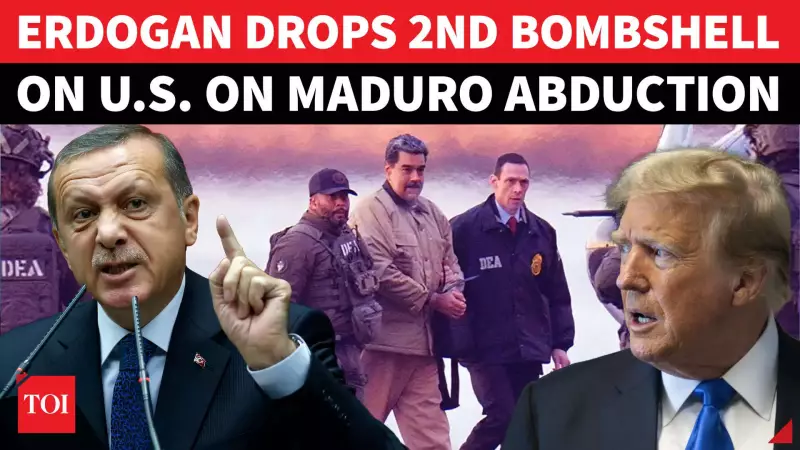
Turkish President Recep Tayyip Erdogan has launched a sharp diplomatic broadside against the United States, accusing it of propagating a falsehood regarding Venezuelan leader Nicolas Maduro. This accusation follows his strong condemnation of former US President Donald Trump's alleged involvement in an illegal raid in Venezuela.
Erdogan's Accusation of an 'American Lie'
In a significant statement that underscores growing tensions, President Erdogan publicly called out what he termed an 'American lie' concerning the legitimacy and actions of Venezuela's President, Nicolas Maduro. Erdogan did not mince words, suggesting that the narrative pushed by certain American circles about Maduro's government is fundamentally dishonest. This direct challenge to US foreign policy narrative marks a bold stance from the NATO ally, highlighting a clear divergence in their geopolitical viewpoints, particularly regarding Latin America.
Condemnation of Trump's Alleged Venezuela Raid
Erdogan's criticism extended to former US President Donald Trump. He slammed Trump for his alleged connection to a recent illegal raid attempt in Venezuela. Reports suggest this operation was aimed at capturing or destabilizing the Maduro government, an act Erdogan framed as a blatant violation of international law and sovereignty. By linking the 'lie' with this aggressive action, the Turkish leader painted a picture of a US strategy based on deception and coercive intervention.

Implications for Diplomacy and Alliances
This verbal escalation from Ankara is not an isolated incident but part of a complex pattern in Turkey's foreign policy. Erdogan's defense of Maduro, whom the US and several other nations consider an illegitimate leader, aligns Turkey with a different set of global actors. The statement serves multiple purposes: it solidifies Turkey's independent stance, appeals to anti-imperialist sentiments domestically and in certain regions, and signals to Washington that Ankara will not hesitate to vocalize its disagreements. The fallout from this could strain an already complicated US-Turkey relationship, affecting coordination on issues from NATO security to Middle Eastern conflicts.
Analysts suggest that Erdogan's comments are a calculated move to position Turkey as a champion of sovereign rights against Western intervention, a theme that resonates with his political base. The direct naming of Trump and the accusation of lying represent a significant departure from diplomatic niceties, indicating a deeper level of frustration or a strategic pivot in Ankara's international engagements.