

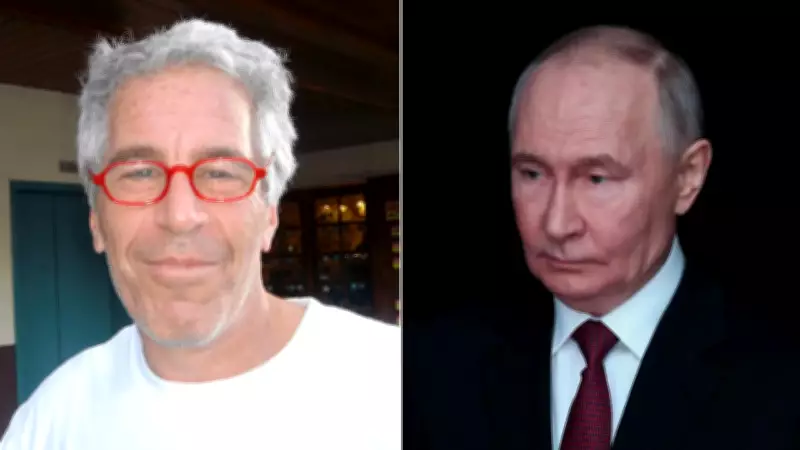
Epstein's Persistent Efforts to Connect with Russian Leadership Uncovered
Newly released documents from the US Justice Department indicate that Jeffrey Epstein, the late financier and convicted sex offender, made repeated attempts to establish links with Russia's highest levels of leadership, including President Vladimir Putin. While the records suggest a consistent pattern of outreach, they contain no evidence that Epstein ever succeeded in forming such connections.
Specific Attempts Through Diplomatic Channels
One particularly clear example of Epstein's efforts occurred in June 2018, approximately one year after the sudden death of Russia's former ambassador to the United Nations, Vitaly Churkin. According to CNN reports, Epstein had maintained regular meetings with Churkin in New York and had even offered assistance to Churkin's son, Maxim, in securing employment at a wealth management firm.
Following Churkin's passing, Epstein actively sought alternative channels to Moscow. On June 24, 2018, he sent an email to Norwegian politician Thorbjørn Jagland, who was then serving as secretary general of the Council of Europe. In the message, Epstein requested that Jagland relay a suggestion to the Kremlin.

"I think you might suggest to putin, that lavrov, can get insight on talking to me. vitaly churkin used (to) but he died. ?!" Epstein wrote, referencing Russian Foreign Minister Sergey Lavrov. Jagland responded that he would meet with Lavrov's assistant and forward the suggestion.
Broader Pattern of Political Outreach
This correspondence forms part of a wider pattern revealed in the documents, which include numerous emails exchanged between Epstein and various international political figures over several years. The materials show that Epstein attempted multiple times to arrange meetings or conversations with Putin, though again, no evidence confirms these efforts were successful.
Earlier correspondence from 2013 indicates Epstein expressed interest in meeting Putin in Sochi and claimed he could provide Russia with advice on attracting Western investment. In one email, he emphasized that Putin would need to allocate "real time and privacy" for such a meeting. Additional emails suggest Epstein believed he either possessed or was close to obtaining access to the Russian leader, but the documents do not verify any actual meeting took place.
International Reactions and Speculation
The disclosures have generated significant speculation across Europe. Polish Prime Minister Donald Tusk announced that Poland would investigate Epstein's potential links to Russian intelligence, describing the allegations as a serious security concern. In response, the Kremlin dismissed these claims, with spokesman Dmitry Peskov stating that suggestions of Epstein being tied to Russian intelligence should "not be taken seriously."
Epstein's Russian Connections and Activities
Epstein maintained associations with several Russians connected to the state, including Sergey Belyakov, a former official with links to the FSB and Russia's sovereign wealth fund. Additionally, Epstein attended the St. Petersburg International Economic Forum and offered to assist Russian officials and investors, as reported by CNN.
While Epstein did travel to Russia and sought visas as recently as 2019, analysts caution that the documents largely portray an individual eager to project influence and ingratiate himself with powerful figures. They emphasize that the materials do not constitute proof that Epstein ever gained genuine leverage or established substantive connections within Moscow's power structures.






