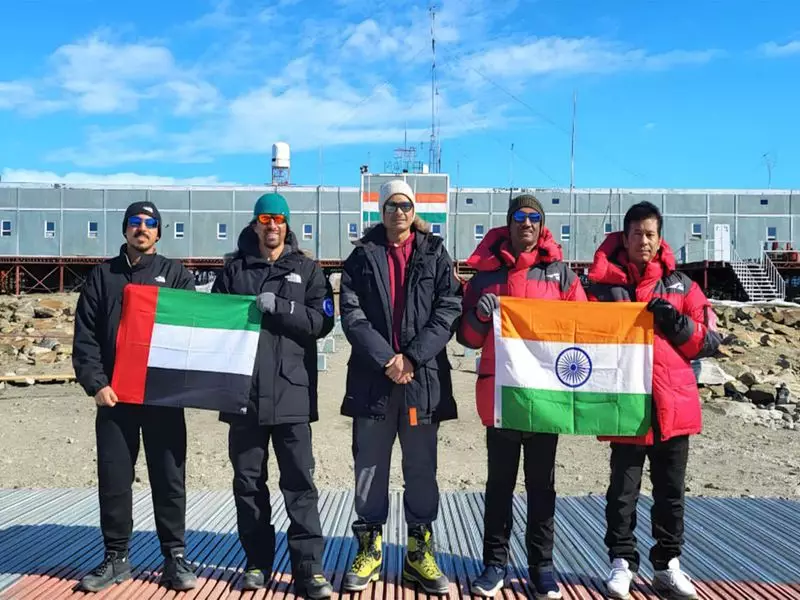
In a significant stride for international scientific collaboration, the frosty expanse of Antarctica has become the stage for a warming partnership between India and the United Arab Emirates (UAE). Four scientists from the UAE have officially joined India's ongoing Antarctic mission, marking the first concrete step under a recently signed cooperation agreement aimed at bolstering polar research.
A Historic Collaboration Takes Root in the Ice
The arrival of the Emirati researchers at India's Maitri Station is not merely a logistical exercise; it is the fruition of a memorandum of understanding (MoU) signed between the two nations. This agreement, inked to foster collaboration in polar studies and climate change research, has now moved from paper to practice. The delegation from the UAE includes scientists whose expertise will contribute to the multifaceted research programs being conducted at the station.
This joint mission is being facilitated and led by India's premier polar research body, the National Centre for Polar and Ocean Research (NCPOR), operating under the Ministry of Earth Sciences. The NCPOR is responsible for orchestrating India's scientific endeavors in the harsh polar environments, and their stewardship is crucial for integrating the international team into the ongoing work at Maitri.

Deepening Ties Through Shared Scientific Goals
The collaboration extends far beyond a symbolic visit. The Emirati scientists are actively participating in a suite of research activities alongside their Indian counterparts. Their work is expected to encompass critical areas of polar science, including the study of climate change indicators, glacial dynamics, and atmospheric conditions. The data and insights gathered from this joint effort will be invaluable for both nations, enhancing their understanding of global climate systems and environmental shifts.
This initiative powerfully underscores the deepening strategic partnership between India and the UAE, which has been expanding rapidly across economic, technological, and now, scientific frontiers. By pooling resources, knowledge, and logistical capabilities in one of the planet's most challenging research environments, both countries are demonstrating a shared commitment to addressing global challenges through science and diplomacy.
Implications for Future Polar Research and Diplomacy
The successful integration of UAE scientists into India's Antarctic program sets a powerful precedent. It opens the door for more sustained and complex joint ventures in the future, potentially involving longer-term expeditions, shared infrastructure, and co-authored scientific publications. This model of South-South cooperation in high-stakes scientific research highlights a shift towards collaborative, rather than purely national, approaches to understanding our planet.
For India, this reinforces its position as a leading nation in polar research with the capability and willingness to host and guide international partners. For the UAE, it represents a strategic entry into meaningful Antarctic research, leveraging India's decades of experience and established presence. The mission at Maitri Station is, therefore, more than a scientific expedition; it is a testament to the growing trust and shared vision between two key global partners, proving that international cooperation can thrive even in the most remote and inhospitable corners of the Earth.