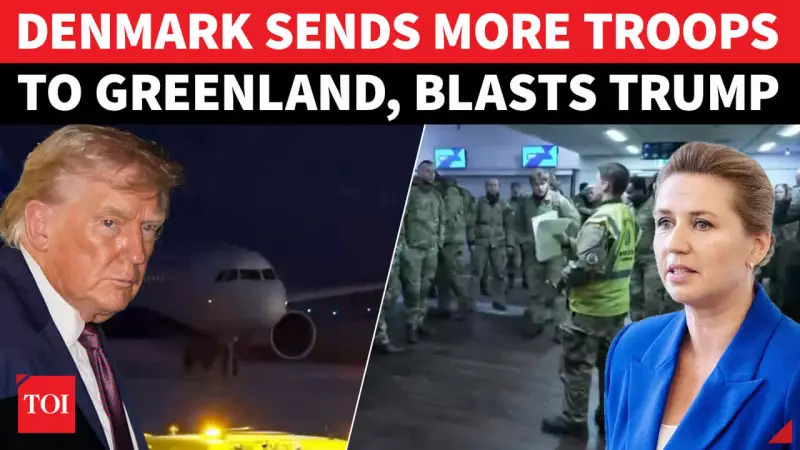
Danish Foreign Minister Lars Løkke Rasmussen delivered a sharp warning to President Trump today. He stated that threatening Europe will not help the United States achieve its goals regarding Greenland.
Pressure Tactics Risk Alliance Damage
Speaking during a diplomatic visit to London, Rasmussen addressed the escalating situation directly. He argued that using threats and pressure as a strategy carries significant risks. This approach could drive a wedge between long-standing allies instead of bringing them closer together.
The minister emphasized the importance of returning to the negotiating table. He called for the United States to re-engage in direct and constructive talks to resolve the Greenland dispute.

Refusing to Rule Out Any Scenario
When questioned about potential outcomes, Rasmussen remained firm. He refused to eliminate any possibilities from consideration while the current climate of uncertainty persists. His stance reflects a cautious approach to a volatile geopolitical standoff.
British Prime Minister Keir Starmer echoed these concerns from London. He labeled President Trump's recent tariff threats as completely misguided and counterproductive.
Analysts Point to a New Political Reality
Political observers are analyzing the broader implications. They suggest that European nations must now adapt to what they term a new Trumpian political logic. This logic prioritizes unilateral pressure over traditional diplomatic channels.
The core tensions revolve around three critical issues. First is the sovereignty of Greenland, a vast Arctic territory. Second is the future of military and economic alliances. Third is the fundamental unity of the transatlantic partnership.
This dispute is testing the resilience of international relationships. It highlights how a single geopolitical flashpoint can threaten decades of cooperative policy.
The situation remains fluid, with diplomatic communications ongoing. All eyes are now on Washington and European capitals for the next move in this high-stakes confrontation.