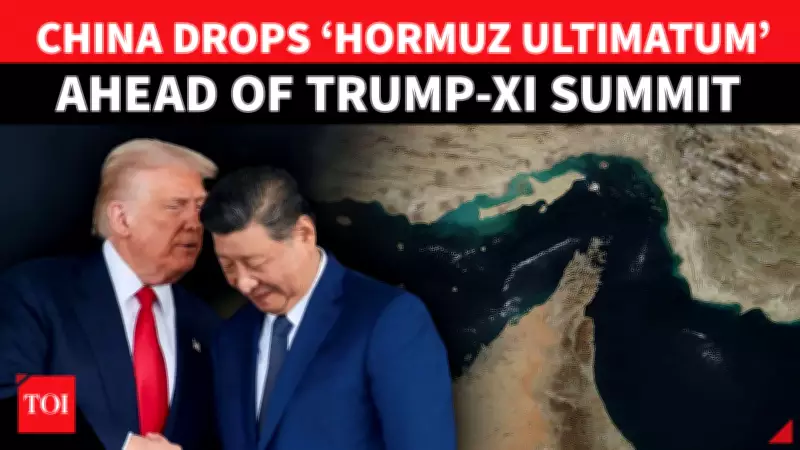
China has issued a stern warning to the White House, signaling that the ongoing Gulf crisis, particularly the situation in the Strait of Hormuz, will dominate discussions ahead of President Donald Trump's upcoming visit to Beijing. According to sources, Beijing has made it clear that unless the crisis is resolved, it will overshadow the much-anticipated Trump-Xi summit.
China's Oil Supply Under Threat
With approximately 40% of its oil supply passing through the Strait of Hormuz, China is deeply concerned about the current tensions. Beijing is demanding a synchronized resolution to both Iran's restrictions and the U.S. naval blockade, which it views as a direct threat to its energy security. The message from China is unequivocal: the era of Operation Epic Fury must end before Air Force One touches down in Beijing.
Behind-the-Scenes Diplomacy
China has been working behind the scenes, leveraging its relationship with Pakistan, to maintain peace and stability in the region. However, its latest stance indicates a hardening of position. Beijing insists that the Gulf crisis cannot be allowed to consume the summit, and a resolution must be reached prior to Trump's arrival.

The Strait of Hormuz is a critical chokepoint for global oil shipments, and any disruption there could have far-reaching consequences for the global economy. China, as the world's largest importer of crude oil, is particularly vulnerable. The U.S. naval blockade, part of Operation Epic Fury, has been a major point of contention, with China viewing it as an aggressive act that threatens international maritime law.
Demands for a Synchronized End
Beijing is calling for a synchronized end to the restrictions on Iran and the U.S. naval blockade. This demand reflects China's desire for a balanced approach that addresses the concerns of all parties involved. China has also emphasized the need for dialogue and diplomacy, urging both the U.S. and Iran to return to the negotiating table.
The Trump-Xi summit is expected to cover a range of issues, including trade, technology, and geopolitical tensions. However, the Gulf crisis now looms large over the agenda. China's warning suggests that unless progress is made on this front, the summit could be overshadowed by discord.
Implications for the Summit
The road to Beijing, as China has made clear, goes through the Strait of Hormuz. The message is a strategic move by Beijing to put pressure on Washington to de-escalate tensions in the Gulf. Whether the White House will heed this warning remains to be seen, but one thing is certain: the Gulf crisis will be a central topic of discussion when Trump and Xi meet.
As the world watches, the outcome of these talks could have significant implications for global energy markets, international security, and the broader U.S.-China relationship. China's firm stance underscores its growing assertiveness on the global stage and its determination to protect its national interests.