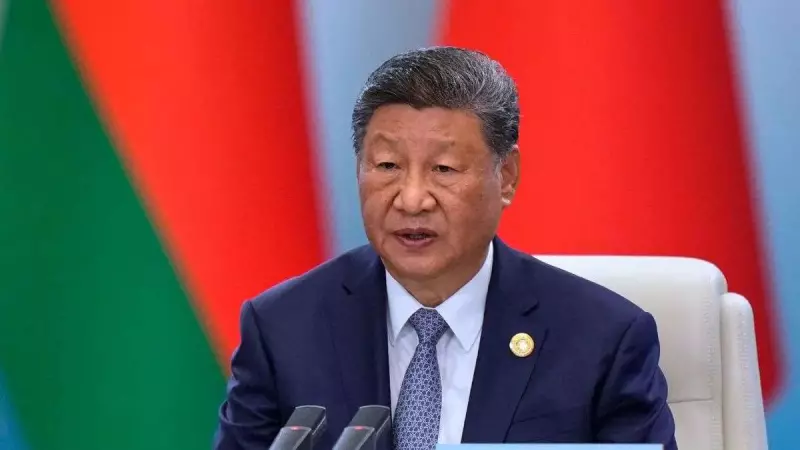
China Declines Participation in Trump's Proposed Gaza Peace Board
In a significant diplomatic development, China has expressed its reluctance to join a peace board for Gaza proposed by former United States President Donald Trump. The Chinese government has instead reiterated its firm stance on supporting a United Nations-led approach to resolve the ongoing conflict in the region. This decision underscores China's commitment to multilateral diplomacy and its preference for international frameworks over unilateral initiatives.
China's Emphasis on UN-Led Solutions
Chinese officials have consistently advocated for the United Nations to play a central role in mediating peace efforts in Gaza. They argue that a UN-led approach ensures broader international consensus and legitimacy, which is crucial for achieving a sustainable and just resolution. By insisting on this method, China aligns itself with global norms that prioritize collective action through established international institutions.
This stance reflects China's growing influence in global affairs, particularly in conflict zones where it seeks to position itself as a responsible stakeholder. The reluctance to join Trump's board may also be seen as a strategic move to distance itself from US-led initiatives, especially those associated with a former administration known for its unilateral policies.

Background on Trump's Peace Initiative
Former President Donald Trump had proposed the formation of a peace board aimed at addressing the Gaza conflict, which has seen periodic escalations and humanitarian crises. The board was envisioned as a platform for key international players to collaborate on peacebuilding efforts. However, China's decision to opt out highlights the challenges in garnering universal support for such initiatives, especially when they diverge from established diplomatic channels like the United Nations.
The Gaza conflict remains a complex and protracted issue, with deep-rooted political, historical, and humanitarian dimensions. International responses have varied, with some countries favoring direct mediation by powerful nations, while others, like China, advocate for a more inclusive and institutionalized process under the UN umbrella.
Implications for International Diplomacy
China's insistence on a UN-led approach could have several implications:
- Strengthening Multilateralism: By supporting the UN, China reinforces the importance of multilateral institutions in resolving global conflicts.
- Diplomatic Rivalry: This move may signal a subtle diplomatic rivalry with the United States, as China seeks to promote its own vision of international order.
- Impact on Peace Efforts: The absence of China from Trump's board could limit the initiative's effectiveness, given China's economic and political clout in the Middle East.
As the situation evolves, it will be crucial to monitor how other nations respond to China's position and whether alternative peace frameworks gain traction. The emphasis on a UN-led approach underscores the ongoing debate between unilateral and multilateral strategies in international conflict resolution.