BNP's Landslide Victory in Bangladesh Elections Marks Political Shift
The Bangladesh Nationalist Party (BNP) achieved a decisive landslide victory in the parliamentary elections held on February 12, setting in motion significant political changes in the nation. This electoral outcome directly impacted the role of Muhammad Yunus, leading to the conclusion of his tenure as chief adviser.
Modi's Diplomatic Engagement and Invitation to New Leadership
Indian Prime Minister Narendra Modi was formally invited to attend the swearing-in ceremony of Tarique Rahman in Dhaka. However, due to a pre-scheduled bilateral meeting with French President Emmanuel Macron in Mumbai, which was arranged weeks in advance, PM Modi was unable to be physically present at the event.
In a gesture of diplomatic goodwill, Prime Modi extended a warm invitation to the newly appointed Prime Minister of Bangladesh. "Your victory is a testimony to the trust and confidence reposed by the people of Bangladesh in your leadership and their mandate for your vision to take the country forward on the path of peace, stability and prosperity," Modi stated. He specifically invited PM Tarique Rahman, along with his wife Zubaida Rahman and daughter Zaima, "on a visit to India at a mutually convenient time. A warm welcome awaits you in India."

Historical Swearing-In Ceremony and International Presence
Tarique Rahman, aged 60, made history by becoming the first male Prime Minister of Bangladesh in 35 years. The oath of office was administered by President Mohammed Shahabuddin at the Jatiya Sangsad, which serves as the unicameral legislative body of Bangladesh. This location choice marked a departure from the long-standing tradition of holding the ceremony at the president's official residence, Bangabhaban.
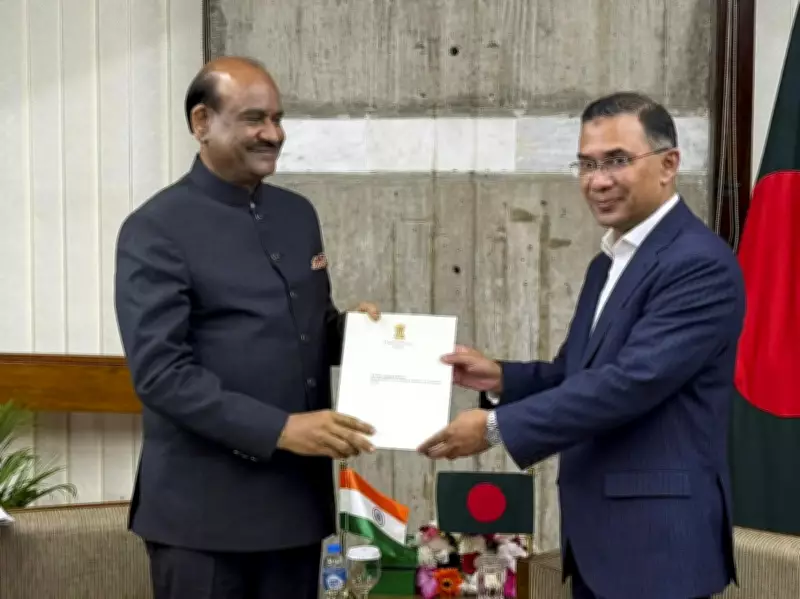
The event was attended by several foreign dignitaries, including Indian Speaker Om Birla, who was accompanied by Foreign Secretary Vikram Misri. Prime Minister Modi distinguished himself as the first global leader to personally call and congratulate Tarique Rahman on his electoral success and subsequent appointment.
Strengthening Bilateral Relations and Future Cooperation
In his correspondence, PM Modi expressed his eagerness to collaborate closely with the new Bangladeshi leadership. "I look forward to working closely with you to strengthen our multifaceted bilateral relations, enhance regional cooperation, and advance our common goals in wide-ranging areas," he wrote. The outlined areas of cooperation include:
- Connectivity and infrastructure development
- Trade and economic partnerships
- Technology and innovation exchanges
- Education and skill development initiatives
- Energy security and healthcare collaboration
- Cultural and people-to-people exchanges
Modi further emphasized the strategic partnership between the two nations, stating, "As two fast-growing economies and aspiring societies, India and Bangladesh can truly become catalysts for each other's sustainable growth, work for each other's security and enable mutual prosperity."
Diplomatic Exchanges and Mutual Commitments
Following the ceremony, Speaker Om Birla met with Prime Minister Tarique Rahman and publicly affirmed India's support on social media platform X. "India stands ready to support Bangladesh's endeavours to build a democratic, progressive and inclusive nation," Birla declared.
In reciprocal diplomatic gestures, the Bangladesh Prime Minister conveyed his greetings to both PM Modi and Speaker Birla. Bangladesh High Commissioner to India, Riaz Hamidullah, reported that "both leaders expressed optimism to work together for wellbeing of the people of Bangladesh and India pursuing people-centric menu of cooperation."
The foundation of India-Bangladesh relations was highlighted by Modi as being "deep-rooted friendship founded on shared history, cultural ties, and the aspirations of our peoples for peace and prosperity." He noted that the alignment of developmental priorities between the two countries would serve as a guiding principle for future collaborative efforts.