The Ministry of Foreign Affairs in Bangladesh has formally expressed its deep concern to the Indian government following a series of disruptive events targeting its diplomatic missions in India. The incidents, which occurred in New Delhi and Siliguri, have prompted calls for immediate action to safeguard diplomatic personnel and premises.
Diplomatic Protests in the Capital and Vandalism in the East
Bangladesh's foreign ministry stated that it conveyed its "grave concern" to New Delhi regarding two separate episodes. The first involved "regrettable incidents" outside the perimeter of the Bangladesh High Commission and the official residence of its diplomats in New Delhi on December 20. The second pertained to acts of vandalism at the Bangladesh visa application centre in Siliguri on December 22. The ministry attributed these actions to "different extremist elements."
In its communication, Dhaka emphasized that it expects the Indian authorities to take prompt steps, in line with their international and diplomatic obligations, to ensure the "dignity and security" of its diplomatic staff and establishments on Indian soil.

Clashes in Delhi and Arrests in Assam
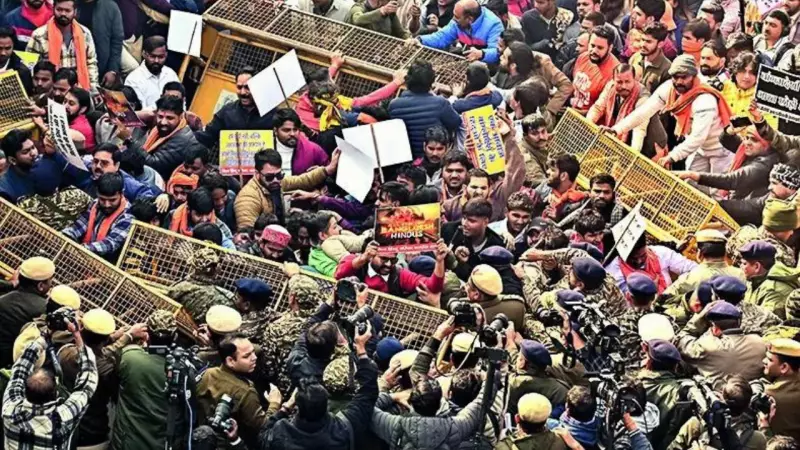
In the national capital, the protest on December 20 saw hundreds of supporters from the Vishva Hindu Parishad (VHP) and Bajrang Dal clashing with police near the Bangladesh High Commission. The demonstrators broke through barricades before being contained. A senior police officer confirmed that many protesters were detained as a preventive measure and were later released after being removed from the site. The officer asserted that adequate force was deployed and the situation was brought under control.
VHP general secretary Surendra Gupta explained the protest, stating their concern was "rooted in the need for accountability and protection of basic human rights." He urged authorities in both India and Bangladesh, as well as other nations, to speak up and called on the Bangladesh government to ensure a "safe and fear-free environment for all communities."
Social Media Provocations Lead to Arrests
Separately, in Assam, police took action against individuals allegedly inciting violence through social media. In Hailakandi district, Ezazur Rahman Laskar (19) was arrested for reportedly creating and circulating a provocative video that sought to justify the lynching of a man named Dipu Chandra Das. A case was registered under relevant sections of the Bharatiya Nyaya Sanhita (BNS).
In another case from Assam, Mohammad Shaif Akhtar Ali from Rangia was detained by police for allegedly posting a controversial video on social media that expressed support for the same lynching incident.
Diplomatic Repercussions and Next Steps
These events have introduced a note of tension into the bilateral relationship between India and Bangladesh. The formal diplomatic complaint underscores the seriousness with which Dhaka views the security of its missions. The Indian government's response and the measures it implements to prevent such occurrences in the future will be closely watched. The situation highlights the ongoing challenge of managing domestic sentiments while upholding stringent international diplomatic protocols.