Violent Clash Erupts in Dhaka as Police Confront Protesters Demanding Justice
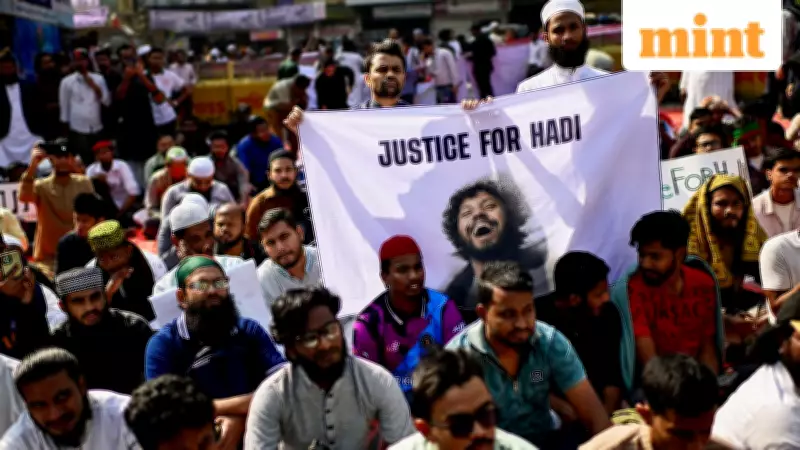
Police forces in Bangladesh engaged in a violent confrontation with activists from the Inqilab Mancha on Friday, resulting in injuries to at least 50 protesters. The clash occurred when demonstrators attempted to defy a government-imposed ban on protests while demanding immediate justice for the killing of their leader, Sharif Osman Hadi, last year.
Security Forces Disperse Crowd with Force
The confrontation erupted as protesters tried to break through security barricades outside the Jamuna residence of interim government chief Muhammad Yunus. Dhaka metropolitan police responded aggressively, deploying batons, sound grenades, and water cannons to disperse the crowd. Witnesses reported that police in full riot gear took strong action as activists pushed past barricades near Jamuna, moving from a nearby sit-in in direct defiance of the announced demonstration ban.
Media reports confirmed that more than 50 protesters sustained injuries during the police action, including Inqilab Mancha member-secretary Abdullah Al Zaber. In a dramatic response to the police crackdown, activists from the cultural group blocked a major intersection in Dhaka's central Shahbagh area, bringing vehicular traffic to a complete standstill.

Government Defends Actions Amid Controversy
Dhaka metropolitan police issued an official statement defending their response, claiming protesters were dispersed in a "fully lawful" manner without using lethal weapons or gunfire. Following the clash, Yunus' office dismissed reports of "excessive use of force" against the demonstrators.
"According to information received from doctors at the emergency department of Dhaka Medical College Hospital, 23 people, including Inqilab Mancha secretary-general Abdullah Al Zaber, received treatment there. But the doctors confirmed that none of them received bullet wounds," the government statement emphasized.
UN Investigation Proposed Amid Tensions
The violent protest occurred despite an announcement from Yunus' office on Thursday that it would propose a United Nations investigation into Hadi's murder. Press secretary Shafiqul Alam stated the government would formally request the Office of the United Nations High Commissioner for Human Rights (OHCHR) to take charge of the inquiry to ensure complete impartiality and justice.
In a subsequent statement following the clashes, Yunus' office reiterated that the interim government was "deeply reviewing the legal aspects" of the UN investigation and would send an official letter to the concerned UN agency on February 8.
Background of Hadi's Killing and Aftermath
Sharif Osman Hadi was a prominent activist in the violent 2024 student-led street movement known as the July Uprising, which ultimately brought down then prime minister Sheikh Hasina's Awami League government. He was also a candidate in the February 12 parliamentary elections when he was shot in the capital on December 12 while campaigning, later succumbing to his injuries.
The aftermath of Hadi's death witnessed significant unrest:
- Hours after his death, supporters set fire to offices of two major newspapers - Daily Star and Prothom Alo
- Progressive cultural groups Chayanat and Udichi Shilpi Goshthi, both over half a century old, were also targeted
- A Hindu factory worker was lynched in central Mymensingh during the violence
Last month, Hadi's brother Omar Hadi told a protest rally that elements within the interim government had plotted the killing to derail the February 12 elections, declaring: "Those who are in power when Osman Hadi was killed, you won't be able to evade the responsibility."
Government Response and Security Measures
The government had earlier observed a day of mourning for "martyr" Hadi, with law adviser Asif Nazrul announcing the murder case would be transferred to a fast-track tribunal under the Speedy Trial Tribunal Act, which stipulates trials must be completed within 90 days once police submit their report.

In a significant show of support, the government allocated Taka 2 crore (approximately USD 20 million) to assist Hadi's family and appointed his elder brother, Abu Bakar Siddiq, as a second secretary at the Bangladesh Assistant High Commission in Birmingham, UK.
The Jamuna residence remains heavily secured with army personnel armed with guns and supported by armoured personnel carriers (APCs), along with regular police forces. As an additional precaution to prevent further escalation of tensions, the government deployed six platoons (approximately 180 personnel) of the paramilitary Border Guard Bangladesh (BGB) on Friday to strengthen the security presence around the area.