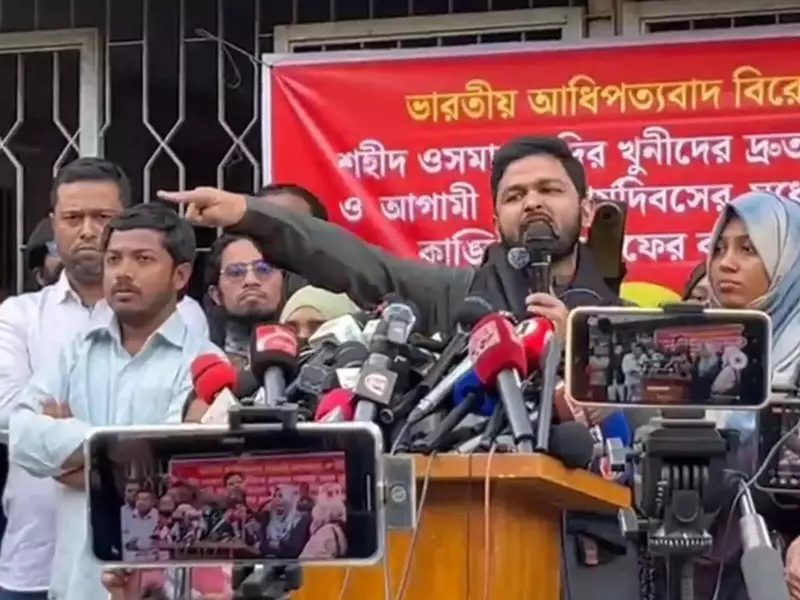
The political landscape in Dhaka witnessed heightened tensions on Tuesday as supporters of the slain radical Islamic leader Sharif Osman Hadi took to the streets. His party, Inqilab Moncho, organized a significant protest dubbed the "March for Justice," pressing a series of controversial demands following his assassination.
Four-Point Demands and International Implications
The core of the protest revolved around a four-point charter of demands. The demonstrators are calling for a proper trial of those responsible for Osman's murder. In a move that escalates bilateral tensions, the group also demanded the cancellation of work permits for all Indian citizens residing in Bangladesh.
Furthermore, Inqilab Moncho insisted on the repatriation of the individuals it claims are Osman's killers, alleging they have found refuge in India. The party warned that if Delhi refuses to hand them over, the Bangladesh government should take the matter to the International Court of Justice. Another key demand involves the identification, arrest, and prosecution of what it called "fascist collaborators" operating within the country's Civil Military Intelligence apparatus.

Denials and Counterclaims from Accused and India
The allegations have been met with firm denials from multiple quarters. Indian authorities have outright dismissed Dhaka's claims that the assailants crossed into India, stating there is no evidence of any illegal border movement in this case.
Adding a new twist, one of the alleged killers named by authorities, Faisal Karim Masud, publicly refuted the charges. In a video statement, Masud denied any involvement in the murder and contradicted the government's assertion that he fled to India. He claimed he was actually in Dubai at the time the allegations were made.
Police Point to Political Vengeance by Awami League
Meanwhile, the Bangladesh Police investigation has taken a definitive turn. Law enforcement officials stated that Osman was killed due to "political vengeance" at the behest of the ruling Awami League. The police have pressed formal charges against 17 individuals in connection with the murder.
Shafikul Islam, Additional Commissioner of the Dhaka Metropolitan Police Detective Branch, provided specific details. He stated, "Osman was killed on the instructions of Md Taijul Islam Chowdhury Bappi, a former councillor of Dhaka North City Corporation (DNCC) Ward-6." The police cited Osman's vocal criticism as a motive, noting that through public rallies and social media, he had strongly criticized the past activities of the now-banned Sheikh Hasina-led Awami League and its student wing, the Chhatra League.
Broader Political Repercussions
This case has now become a focal point for opposition groups and critics of the government. The "March for Justice" underscores the deep political fractures within Bangladesh and highlights how internal disputes can quickly inflame diplomatic relations with neighboring India. The demand to expel Indian workers introduces an economic and communal dimension to the political conflict, potentially affecting thousands. As the judicial process unfolds and diplomatic channels engage, the fallout from Osman's murder continues to shape the political discourse in both Dhaka and Delhi.