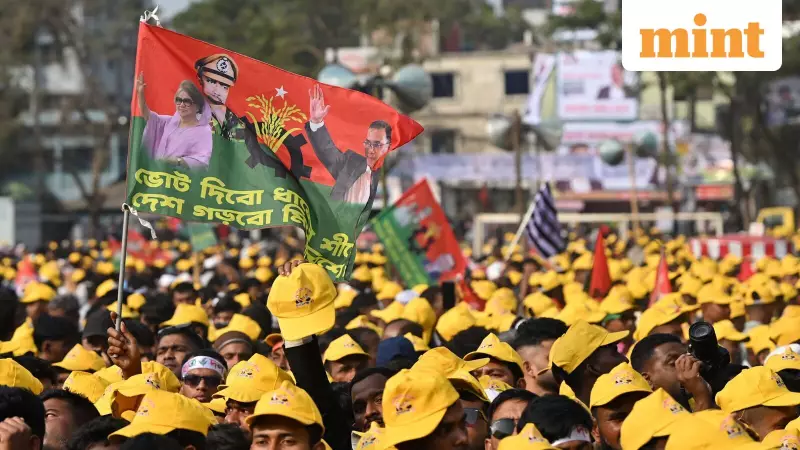
Bangladesh Launches Election Campaigning Amid Historic Political Transition
Campaigning officially commenced on 22 January for Bangladesh's highly anticipated general elections scheduled for next month. This marks the first electoral process since the 2024 uprising brought an end to the autocratic rule of Prime Minister Sheikh Hasina, reshaping the nation's political landscape. The formal start followed the allocation of election symbols and confirmation of final candidates, initiating full-scale political activities across the South Asian nation of 170 million people.
Election Schedule and Preparations
According to official announcements, campaigning will continue until 7:30 AM on 10 February, with voting set for 12 February from 7:30 AM to 4:30 PM. The Election Commission has begun extensive preparations, including training over 800,000 presiding and assistant presiding officers starting from 22 January. This training program will run until 7 February as part of comprehensive arrangements for the electoral process.
Political Landscape and Candidate Participation
Nearly 2,000 candidates are contesting for 300 parliamentary seats in what promises to be a fiercely competitive election. Major political parties have fielded substantial numbers of candidates:

- Bangladesh Nationalist Party (BNP): 288 candidates
- Jamaat-e-Islami: 224 candidates
- Jatiya Party: 192 candidates
- Islamic Andolan Bangladesh Party: 253 candidates
- Independent candidates: 249 contestants
The National Citizens Party, contesting in alliance with Jamaat-e-Islami, has announced 32 candidates of its own, adding further complexity to the multi-party race.
Key Political Figures and Campaign Strategies
Tarique Rahman, the 60-year-old chairman of BNP who returned from 17 years in exile last December, formally assumed leadership following the death of his mother, former Prime Minister Khaleda Zia. The BNP launched its official campaign from Sylhet, home to the centuries-old shrine of Shah Jalal, where Rahman prayed before beginning his nationwide roadshow of rallies.
Meanwhile, Jamaat-e-Islami Ameer Shafiqur Rahman commenced his campaign in the Dhaka-15 constituency, planning to tour eight districts in the northern region over two days. The National Citizen Party, formed by student leaders who spearheaded the 2024 uprising, will also launch their rally in Dhaka as part of their alliance with Jamaat-e-Islami.
Transitional Leadership and Referendum
Muhammad Yunus, the 85-year-old Nobel Peace Prize laureate who returned from exile in August 2024 to lead a caretaker government as "chief adviser," will step down after the polls. Yunus described inheriting a "completely broken" political system and has championed a reform charter that he argues is vital to prevent a return to authoritarian rule. A nationwide referendum on these constitutional changes will be held simultaneously with the elections on 12 February.
"If you cast the 'yes' vote, the door to building the new Bangladesh will open," Yunus declared in a 19 January broadcast, urging public support for the referendum.
Security Concerns and Disinformation Challenges
The electoral process unfolds against a backdrop of significant security concerns, including the murder last month of a student leader involved in anti-Hasina protests. Yunus has warned UN rights chief Volker Turk about a "flood" of misinformation targeting the polls, expressing concern about the impact of disinformation from both foreign media and local sources.
European Union election observers have described the upcoming vote as the "biggest democratic process of 2026," highlighting its regional and global significance.

International Relations and Diplomatic Developments
Bangladesh's relations with India have deteriorated significantly since Hasina fled to New Delhi after protesters stormed her palace. The former prime minister, now 78 years old, was sentenced to death in absentia in November for crimes against humanity related to her government's crackdown on protesters.
In a recent development, India has classified Bangladesh as a "non-family" posting and advised diplomats and their dependents to return home as a precautionary measure. This decision follows rising communal incidents and security concerns, including violent protests outside the Indian mission in Chattogram last month and threats following the killing of Islamist youth leader Sharif Osman Hadi in December 2025.
Regional Implications and Future Outlook
The election results are expected to reshape both domestic politics and regional power dynamics in South Asia. With the BNP widely anticipated to emerge as the single-largest party, Indian officials have reportedly reached out to the party leadership. The outcome will determine Bangladesh's political direction after years of turmoil and mark a significant transition in the nation's democratic journey.