

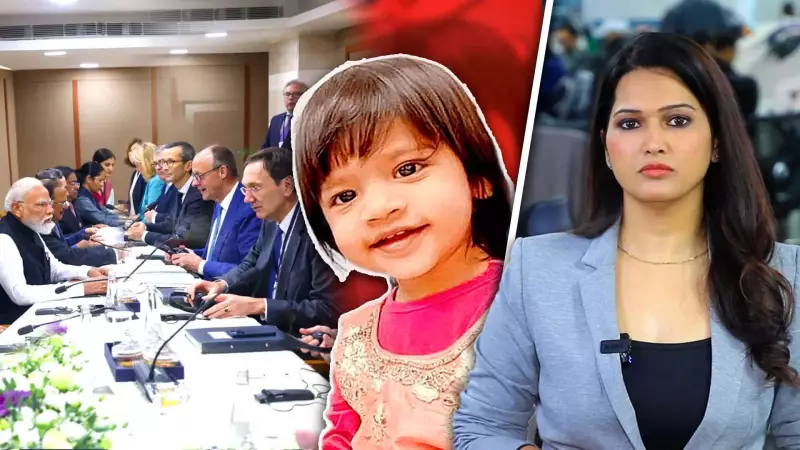
The high-stakes diplomatic dialogue between Prime Minister Narendra Modi and German Chancellor Friedrich Merz covered critical global issues from trade to defence. Yet, it was the fate of a single four-year-old child that emerged as one of the most emotionally charged points of discussion, elevating a personal tragedy to the pinnacle of bilateral relations.
A Child's Case Reaches the Highest Level
The Ministry of External Affairs has confirmed that Baby Ariha Shah, an Indian child who has been in German foster care for over three years, was personally discussed by the two leaders. This occurred during Chancellor Merz's first official visit to India, which also marked his inaugural trip to Asia in his current role. The inclusion of this sensitive matter amidst talks on strategic cooperation underscores its profound importance to the Indian government.
Ariha's ordeal began in September 2021 when German authorities took her into protective custody following an injury incident. Her parents have maintained that the injury was accidental and have been engaged in a protracted legal battle ever since to secure her return. For years, the case proceeded through legal channels, but India has now decisively shifted the framing.

From Legal to Humanitarian: India's Firm Stance
India's position is clear: this is no longer just a legal issue but a humanitarian one. Foreign Secretary Vikram Misri articulated the government's unwavering support, stating that India is standing with the family at every step and continues to engage German authorities at all levels. This diplomatic persistence signals that the welfare of Indian citizens, especially a vulnerable child, transcends standard protocol.
Concerted efforts are also being made to ensure that Ariha, during her stay in Germany, remains connected to her Indian cultural roots. This includes maintaining exposure to Indian languages, traditions, and festivals, a crucial aspect for her identity development.
A Signal to the World: Citizen Welfare First
By raising Ariha Shah's case at the summit level, Prime Minister Modi's administration sends a powerful message about its priorities. It demonstrates that the protection and well-being of every Indian abroad, regardless of age or circumstance, is a non-negotiable pillar of foreign policy. The case has galvanized national attention, transforming it into a matter of both national concern and humanitarian imperative.
The discussion between Modi and Merz highlights how individual human stories can shape and define international diplomacy, sometimes carrying as much weight as discussions on global security or billion-dollar trade deals. The outcome of this sustained diplomatic pressure is now awaited by a nation emotionally invested in the safe return of its youngest citizen.






