

The $3.4 Trillion China Mistake That Now Defines Every US Deal With India
Between 2012 and 2024, the United States quietly spent a staggering $3.4 trillion containing a rival it had spent the previous two decades helping create. Not a single shot was fired in direct combat, yet this colossal expenditure represents a profound strategic miscalculation that is now reshaping America's approach to India. According to the Brown University Costs of War project, this amounted to $260 billion every year for twelve years against one country, with no end in sight. The errors Washington is determined not to repeat were not military failures; they were commercial and strategic blunders that have left an indelible mark on global geopolitics.
How America Enabled China's Rise
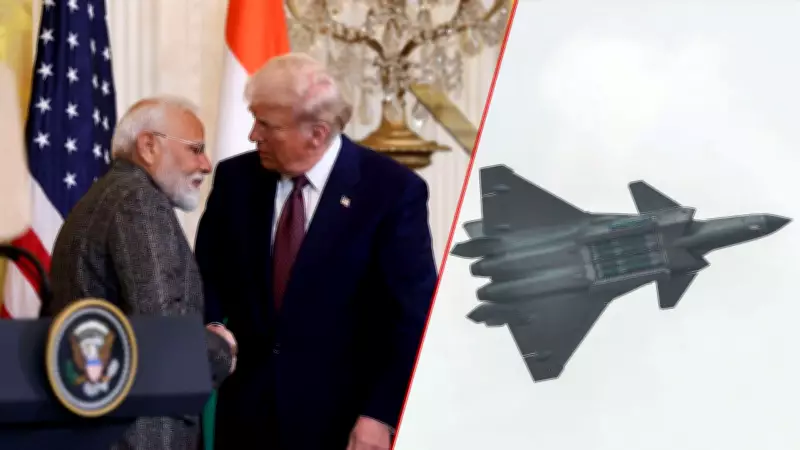
After the Tiananmen Square incident, Washington imposed brief sanctions but quickly moved on, opting for engagement over isolation. The US backed China's entry into the World Trade Organization and granted Permanent Normal Trade Relations, operating under the optimistic promise that economic prosperity would inevitably bring political liberalization. American firms flooded China with massive investments and proprietary technology, seeing it as a vast market opportunity. However, Beijing had a different plan: it took the technology, mandated joint ventures, forced intellectual property transfers, and systematically reverse-engineered everything from solar panels to, most pointedly, an F-35-inspired J-20 stealth fighter built from know-how acquired through American firms' forced disclosures.
The Costly Aftermath and Strategic Shift
By the time Washington fully grasped what had transpired, China had transformed into a formidable power with the world's largest navy, a peer-level air force, and a dominant semiconductor and manufacturing base. This turned the containment bill into a permanent fixture of the Pentagon's budget, highlighting a failure of foresight. In response, US officials have now stated explicitly that they will not apply the same approach to India. New Delhi is viewed in Washington not as a peer rival but as a crucial counterweight to China in the Indo-Pacific region. However, the conditions attached to this relationship are hardening significantly.

Managed Engagement with India
Experts describe the new US strategy as one of managed engagement, tying every significant technology transfer, arms deal, and market access concession to specific, non-negotiable demands. These include:
- Reduced imports of Russian arms to diversify India's defense suppliers.
- Quad interoperability commitments to strengthen military coordination with the US, Japan, and Australia.
- Ironclad intellectual property safeguards to prevent the reverse engineering that gave China its strategic edge.
Any high-technology transfer—whether involving jet engines, drone systems, or semiconductors—is now expected to come with stringent firewall conditions. These measures are specifically designed to block the kind of technological leakage that empowered China's military and industrial ascent. This cautious approach reflects a hard-learned lesson from the $3.4 trillion mistake, ensuring that cooperation with India advances mutual interests without compromising long-term security.






