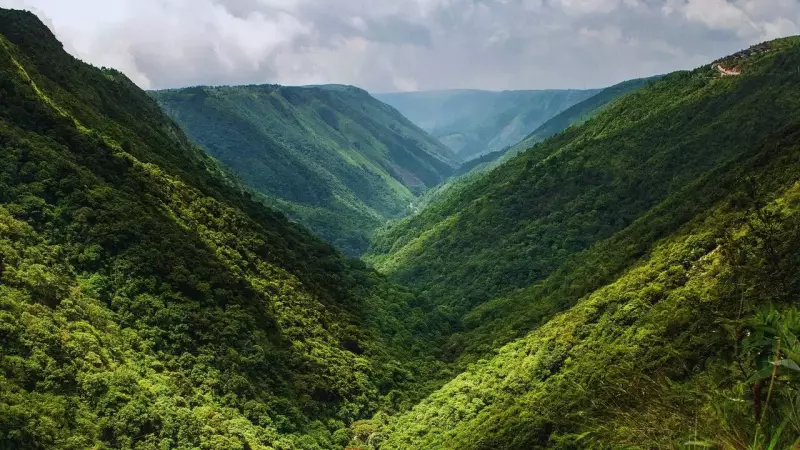
In a unique tribute to the element that defines its very existence, Meghalaya is on the verge of opening a groundbreaking institution: the Rain Museum and Research Centre. Located in Sohra, globally renowned as Cherrapunji, this ambitious project promises to transform our understanding of rainfall from a mere weather event into a profound cultural and scientific experience.
Why Cherrapunji is the Perfect Home for a Rain Museum
Sohra, or Cherrapunji, is a name etched in global meteorological history. For decades, it held the record as the wettest place on Earth, a title now held by its neighbour, Mawsynram. Both locations present a fascinating geographical puzzle. Despite being far from the coast, they receive some of the planet's most torrential rainfall. This phenomenon occurs when moisture-saturated clouds from the Bay of Bengal travel over the plains of Bangladesh and then are forced to rise abruptly by nearly 4,500 feet along the steep slopes of the Khasi Hills. This sudden ascent triggers intense condensation, resulting in the legendary downpours.
This unique setting, managed by the Meghalaya Basin Development Authority (MBDA), makes Sohra the ideal location for a museum dedicated entirely to rain. Unlike high-rainfall island regions, Meghalaya's rainfall is driven by this distinct orographic lift, a story the museum is poised to tell.

An Immersive Journey Into the World of Rain
The Rain Museum is designed to be far more than a collection of exhibits. It is conceived as an indoor and outdoor experiential space where visitors don't just learn about rain—they feel its impact. The journey begins with an immersive understanding of daily life in one of the world's wettest human habitats.
Moving deeper, interactive displays will decode the science behind cloud formation, monsoon patterns, and the specific mechanics that lead to extreme rainfall in the Khasi Hills. Visitors will witness visual simulations tracing the path of clouds from the Bay of Bengal. The aim is to foster dynamic engagement with the subject, moving beyond static information to create a living dialogue about geography and climate.
A Hub for Cutting-Edge Research and Community Learning
Beyond the public galleries, the complex will house a state-of-the-art Rain Research Centre. Modeled on esteemed institutions like the High Altitude Cloud Physics Laboratory in Mahabaleshwar, this facility will feature advanced meteorological labs, observation systems, and a dedicated data centre.
The Meghalaya government envisions strategic collaborations with major national bodies, including the India Meteorological Department (IMD) and ISRO. This will create a robust ecosystem for advanced weather monitoring and climate change research in North-East India.
The overarching vision, however, is one of education and empowerment. The museum aims to be a convergence point for students, teachers, tourists, and local communities. Through workshops, guided tours, live demonstrations, and seasonal exhibitions, it will illuminate rainfall's critical connections to water security, agriculture, disaster preparedness, and the global climate crisis.
By blending lived experience with hard science, the Rain Museum in Sohra is set to become a global landmark—a place where the monsoon is not just measured, but truly understood.