Uttarakhand's Iconic Hill Stations Paralyzed by Mounting Traffic Woes
Two of Uttarakhand's most beloved hill destinations, Mussoorie and Nainital, are currently ensnared in a deepening crisis of traffic congestion, sparking alarm among tourists, local residents, and administrative authorities alike. The picturesque retreats, famed for their scenic beauty, are now grappling with gridlocks that threaten both the visitor experience and daily life.
Mussoorie's Bridge Bottleneck and Parking Predicament
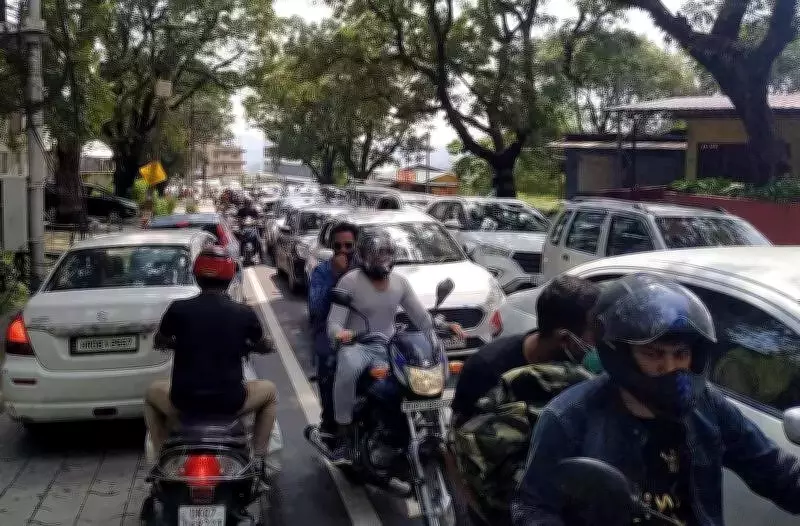
In Mussoorie, traffic snarls have become an almost predictable weekend ritual, particularly along the crucial Mussoorie-Dehradun road and in bustling areas like Mall Road, Lal Tibba, and Mullingar. The situation deteriorated significantly after a bridge on the Mussoorie–Dehradun route was destroyed by a cloudburst on September 16 last year.
Although the road has seen partial restoration, a temporary bailey bridge now manages traffic at the site, permitting only one-way movement. "This single-lane arrangement causes extensive jams on weekends. Constructing a permanent bridge is imperative to alleviate this persistent inconvenience," emphasized Sanjay Aggarwal, President of the Mussoorie Hotels Association.

PWD Assistant Engineer Pradeep Singh Shahi confirmed, "A new bridge, with an estimated cost of Rs 12 crore, has been proposed and awaits approval. Its completion is expected to resolve the congestion issues at the bailey bridge location."
Compounding the problem is rampant roadside parking along narrow lanes in Gandhi Chowk, Picture Palace, Landour, Mullingar, and Lal Tibba, especially during peak tourist seasons. Locals argue that the government must prioritize developing sufficient parking facilities to prevent these bottlenecks from strangling mobility.
Nainital's Narrow Roads Overwhelmed by Tourist Influx
Meanwhile, Nainital confronts analogous challenges as its constricted road network struggles to cope with escalating tourist numbers. On busy weekends and holidays, vehicles inch along approach routes from Bhowali, Kaladhungi, and Haldwani, forming queues that extend for kilometers.
Key parking zones such as DSA Flats, Metropole, BD Pandey, Anda Market, and Sukhatal reach capacity early, forcing drivers into endless circles in search of vacant spots. Residents report that congestion now impacts daily routines throughout the year, driven by a surge in private vehicles and severely limited parking infrastructure.
Tragically, these delays have had fatal consequences, including a recent incident where a businessman lost his life while being transported by an ambulance caught in a traffic jam.
Judicial Directives and Proposed Remedies
The Uttarakhand High Court has intervened, directing authorities to remove long-parked vehicles from main arteries and install CCTV cameras to enhance traffic management. While police have implemented entry regulations and special traffic plans, the relief provided has been minimal.
With little room for road expansion, stakeholders are advocating for sustainable, long-term solutions. These include:
- Upgraded parking infrastructure
- Enhanced public transportation systems
- Comprehensive, forward-thinking traffic planning
Digvijay Singh Bisht, President of the Nainital Hotel Association, stated, "Peak-season congestion around Nainital and Kainchi Dham not only frustrates tourists but also adversely affects local commerce." Residents and business owners have urged the government to accelerate projects like the Metropole Parking facility and the Kainchi Temple bypass, widen key approach roads with minimal environmental impact, and establish permanent roadside parking bays.
Sanjeev Bhagat, a businessman from Bimtal, proposed a mandatory pre-registration system for tourists visiting Nainital and Kainchi Temple. "Such a system would enable real-time monitoring of visitor numbers, allowing for more efficient traffic and parking management and ensuring better emergency readiness. If a full-scale rollout isn't immediately viable, a phased or area-specific implementation could serve as a practical starting point," he suggested.

The collective call from both hill stations is clear: immediate and decisive action is required to preserve their charm and functionality, safeguarding them from the creeping paralysis of unmanaged traffic.