A British tourist's seemingly innocent holiday video has become a global cautionary tale, highlighting how hidden dangers can lurk in the most ordinary travel moments. What was shared as a clip of a curious beach encounter was later identified by the online community as a close brush with one of the world's most venomous marine creatures.
A Routine Morning Walk Turns Perilous
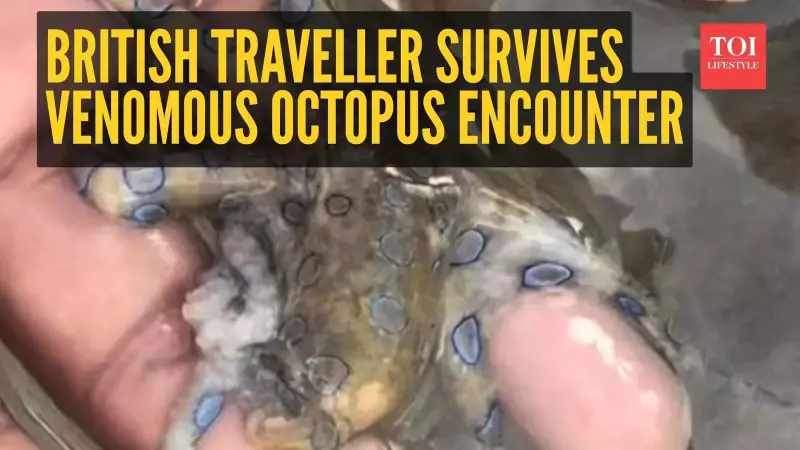
Andy McConnell, a British journalist and glass historian, was enjoying a vacation in the Philippines when the incident occurred. During a routine morning walk along the beach, he noticed a group of excited children passing around a small sea creature. The children informed him it was a "baby octopus," and at the time, nothing seemed out of the ordinary or threatening.
Driven by curiosity, McConnell joined the children briefly. He recorded a short video of himself handling the small animal before handing it back. One of the children then placed the creature inside a sea urchin shell in a nearby rock pool. McConnell continued his walk, completely unaware of any risk, believing it was just a harmless interaction with local wildlife.

The Internet Sounds the Alarm
The situation changed dramatically after McConnell posted the video on his Instagram account. As the clip gained traction, amassing over half a million views, concerned social media users flooded the comments section. They urgently pointed out a critical error: the animal was not a harmless baby octopus.
The online community correctly identified it as a blue-ringed octopus, a marine animal known for its potent neurotoxin. Until he read these comments, McConnell had remained completely "oblivious" to the grave danger he had been in. He later described the entire episode as a "close encounter with death" in a follow-up post.
Why the Blue-Ringed Octopus is a Grave Threat
The blue-ringed octopus is deceptively beautiful and small, often fitting in the palm of a hand, but it carries a deadly secret. Its bite delivers a powerful tetrodotoxin, a neurotoxin that can cause:
- Muscle paralysis
- Respiratory failure
- Death within minutes if medical treatment is not administered immediately
There is no known antidote for the toxin, making immediate emergency care vital. The creature's danger lies in its unassuming appearance, which can easily mislead tourists and even experienced divers.
A Vital Reminder for Global Travellers
This viral incident serves as a stark reminder for all travellers, especially those exploring coastal and marine environments. The key takeaways are clear:
Do not handle unfamiliar wildlife. The allure of interacting with local animals can be strong, but it poses significant risks to both the person and the creature.
Educate yourself about local dangers. Before visiting a new destination, especially in biodiverse regions like Southeast Asia, research potentially hazardous flora and fauna.
When in doubt, observe from a distance. Admiring nature's wonders is safest when done without physical contact.
For Andy McConnell, the shock came not during the encounter itself, but in the sobering aftermath, when the reality of his risk became clear through the eyes of the internet. His story underscores a modern truth: while travel opens doors to incredible experiences, a moment of uninformed curiosity can have serious consequences.