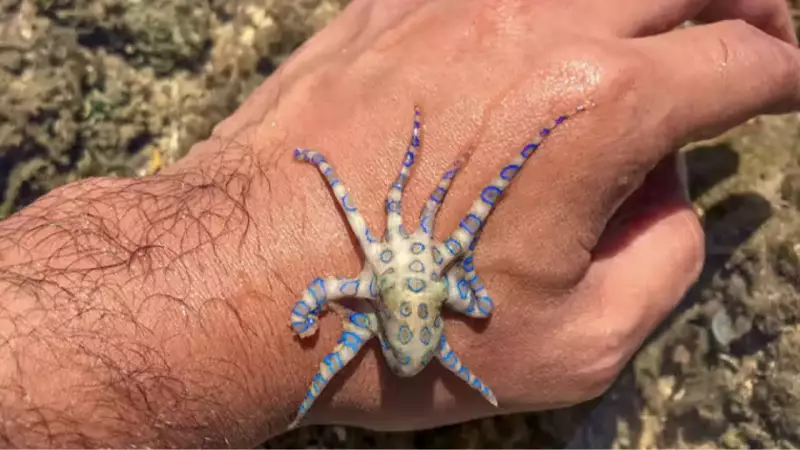
A British holidaymaker in the Philippines had a terrifyingly close brush with death, completely unaware that the tiny sea creature he was handling was one of the most venomous animals on the planet. The man filmed himself picking up what he thought was a harmless baby octopus from a beach, only to later discover it was a lethal blue-ringed octopus.
A Viral Video Reveals the Danger
The tourist shared the clip on Instagram, where it quickly went viral. It was the flood of alarmed comments from viewers that finally alerted him to the grave danger he had been in. Only after the online reaction did he realise his holiday moment had been a potentially fatal encounter. Marine experts believe his survival was largely down to luck, as the octopus did not inject its venom.
Why the Blue-Ringed Octopus is So Deadly
Despite its small size, often no bigger than an apple, the blue-ringed octopus carries a potent neurotoxin called tetrodotoxin. This is the same poison found in pufferfish. The toxin is estimated to be about 1,000 times more deadly than cyanide, and a single octopus holds enough venom to kill multiple adults.

The poison works by blocking nerve signals, leading to rapid paralysis. Symptoms can start within minutes of a bite and include:
- Tingling and numbness around the mouth
- Loss of muscle control
- Severe difficulty in breathing
In the worst cases, total paralysis can occur in 10 to 30 minutes. The victim remains fully conscious but unable to move or breathe, making immediate emergency care critical for survival.
No Antidote Exists: Survival Depends on Speed
There is no known antidote for the blue-ringed octopus's venom. Treatment involves providing supportive care, especially assisted ventilation, to keep the patient alive until the toxin's effects wear off. With proper respiratory support, full recovery is possible, but delay can be fatal.
These octopuses are found in shallow coastal waters across the Indo-Pacific region, including:
- The Philippines
- Australia
- Indonesia
- Japan
They often hide in rock pools, coral rubble, and sandy seabeds, bringing them into accidental contact with swimmers, snorkellers, and beachgoers. They are not aggressive and typically bite only when threatened or handled.
A Stark Warning for Beachgoers and Travellers
This frightening incident has prompted marine biologists to renew their warnings for all travellers. The key takeaway is clear: never touch or handle unfamiliar marine life, especially small or brightly coloured creatures. What looks innocent can sometimes be among the deadliest animals in the world. This serves as a crucial reminder for Indian tourists visiting similar coastal destinations to exercise extreme caution and admire marine life from a safe distance.